Albanese Meets Trump After ‘Super Intelligence’ Call
 AAPUpdated 2 hours Ago2 Mins read
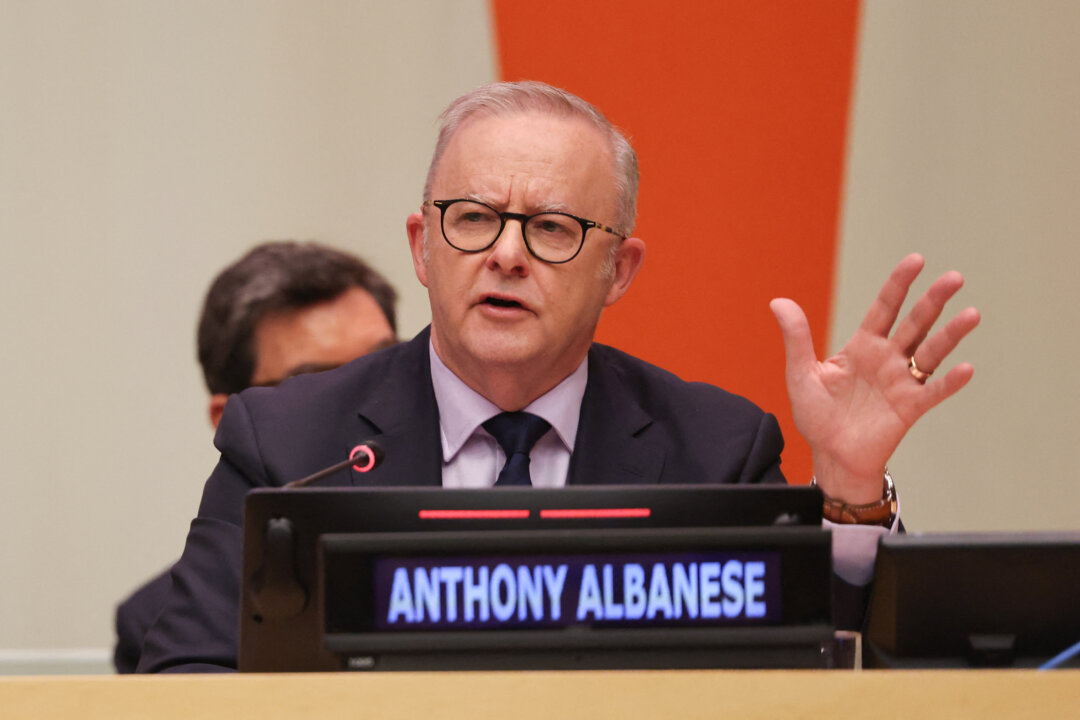
Anthony Albanese has come face to face with Donald Trump, as the U.S. president earlier rejected calls to rein in the use of artificial intelligence.
The prime minister had a brief one-on-one conversation with Trump at a gala dinner hosted by the president on the sidelines of the UN General Assembly in New York on Sept. 23, Australian time.
The two leaders had a warm and positive conversation, with Albanese taking a selfie of the pair.
“Always good to catch up with @POTUS,” he said on the social media platform X.
The meeting followed the two leaders diverging on how to tackle the growth of AI technology, with the U.S. leader urging for development to speed up.
But the prime minister still believes a coalition of nations can work together to put in place greater human control for the technology.
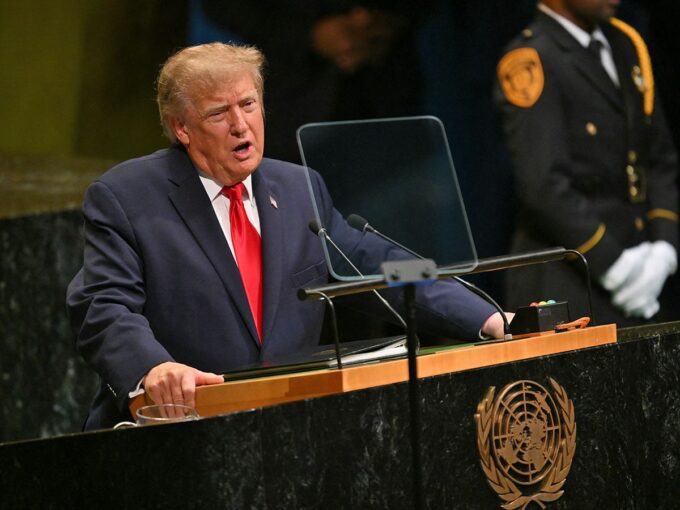
In an address to the UN General Assembly on Sept. 23, Australian time, the U.S. president said AI should be renamed as “super intelligence”, rejecting calls for more protections.
He said AI had a potential to be bigger than the Industrial Revolution or the internet.
“The use of the word ‘artificial’ makes intelligence sound fake. It is not fake, it’s actually amazing,” he told delegates.
“The United States also totally rejects any attempt to construct a globalist scheme to control the artificial intelligence being spoken of.”
Trump has previously said concerns about AI were a hoax and limiting its growth would cause America to cede ground to China.
The U.S. president will meet with Chinese Leader Xi Jinping in Washington on Sept. 24, U.S. time.
Albanese denied the comments from Trump had dampened efforts by Australia and other nations to slow the roll out.
“We have put forward a strong position,” he told reporters in New York.
“There are a range of advantages, but we need to make sure that humans are in control.
“We’ll wait and see what comes out of the meeting between President Trump and President Xi.”
The comments come a day after Albanese joined more than 20 other countries urging greater oversight for AI.
The joint statement—also signed by Germany, the Netherlands, Finland and South Africa—warned the pace of AI’s development could outpace abilities to manage the associated risks.
“AI must remain under human direction, oversight and control. It must be developed and used in line with international law,” the joint statement said.
Albanese said other countries were announcing reforms for AI.
“This is just one of the aspects that the world now is debating,” he said.
The prime minister told a UN coalition for child protections in the AI age that while the technology had the potential for opportunities, there were dangers involved.
“We also see that AI can pose a range of potential risks. From the exploitation of children, the potential to enable biological weapons, or even the loss of control of AI systems themselves,” he said.
“And as AI capabilities advance, these risks will increasingly cross borders.”
French President Emmanuel Macron said countries needed to act immediately on the threat of AI, rather than waiting for reforms like with social media.
“We certainly do not want to repeat the mistakes that we made in relation to social networks,” he said.
“We need to understand how these models develop and build precisely the proper answers.”
Albanese was in the audience for Trump’s address to the United Nations, alongside Foreign Minister Penny Wong.
The prime minister also briefly spoke with former foreign minister Julie Bishop and Canadian Prime Minister Mark Carney.
By Andrew Brown in New York City





At UN, Trump threatens Iran with ‘hell,’ then after reveals the two sides had ‘very productive’ talks
U.S. President Donald Trump addresses the United Nations General Assembly at the...
EU tells Zelenskyy to strengthen rule of law in Ukraine before any more monetary aid comes
Ukraine's President Volodymyr Zelensky meets with European Commission President Ursula von der...
Republican senator calls for probe into Trump family’s financial dealings
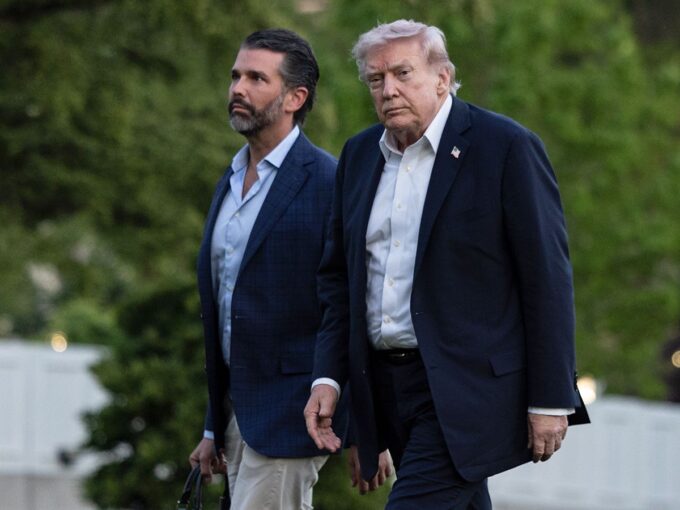
U.S. President Donald Trump with his son Donald Trump Jr. in May...
EU Removes 2 Russian Oligarchs From Sanctions List
Ambassadors of the European Union’s 27 member states removed three people and...