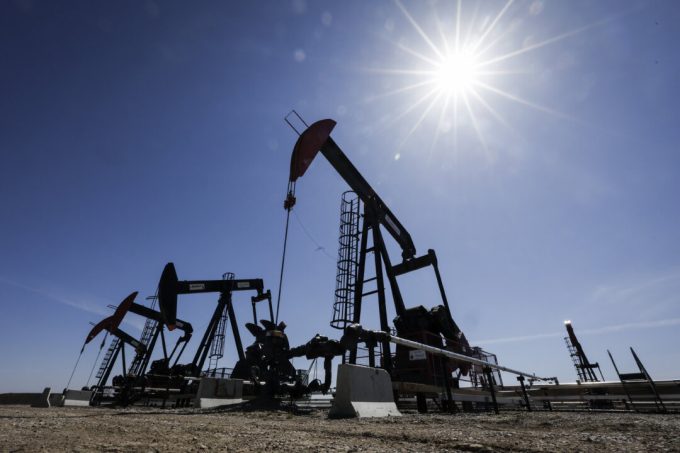

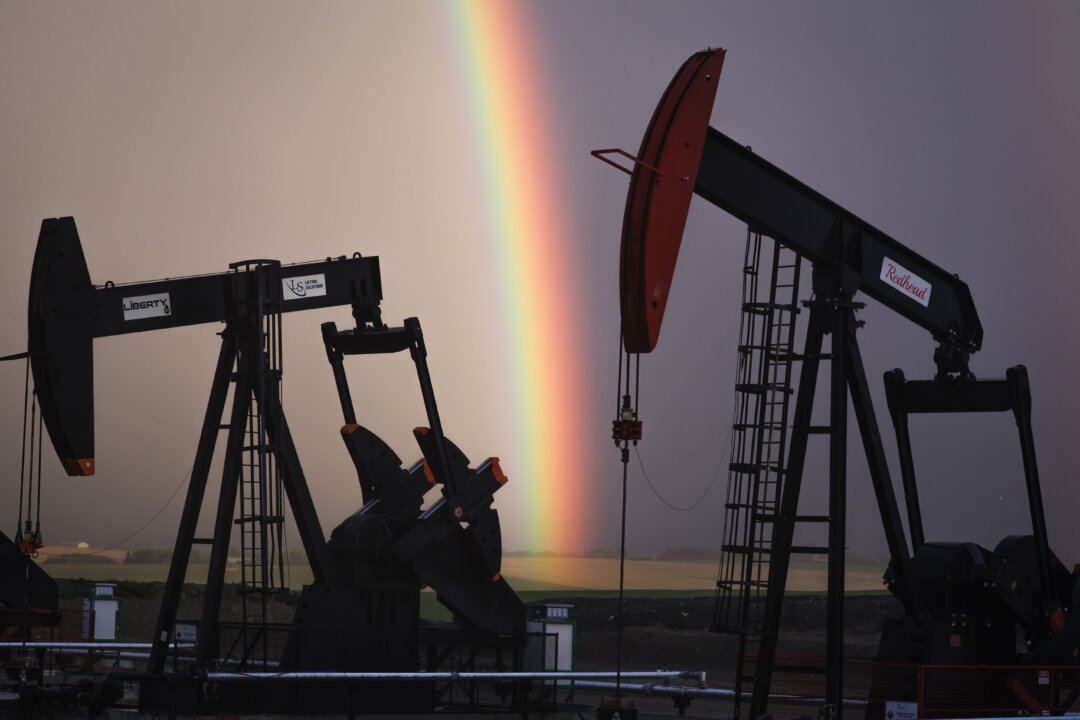

Pumpjacks draw out oil and gas from wells near Calgary on Sept. 18, 2023. The Canadian Press/Jeff McIntosh
Alberta will record a surplus of $2 billion for the fiscal year 2026-2027 driven by increased global oil prices, reversing earlier predictions of a $9.4 billion deficit.
Alberta Finance Minister Jason Nixon announced on Aug. 27 that the province’s budget would be balanced for the sixth year in a row.
“Alberta’s focus remains on responsibly managing our finances, diversifying our economy, and ensuring services are available when Albertans need them,” he said on social media.
The provincial government saved $225 million in debt servicing costs as a result of reduced borrowing, Nixon said, adding that the Heritage Fund—which uses oil revenues to make long-term investments for Albertans—is set to reach $35 billion by 2027.
“Alberta has been given an opportunity and Alberta’s government will not waste it,” he said.
The fiscal update for the first quarter showed an $11.4 billion improvement compared to Budget 2026, which included a $9.7 billion jump in non‑renewable resource revenue as West Texas Intermediate (WTI) crude averaged US$73.50 a barrel. Revenues rose to $86.3 billion, while expenses were at $84.2 billion.
Related Story

The province projected in February it would see revenues of $74.6 billion in revenue and $83.9 billion in spending for 2026–2027, which would have been Alberta’s largest shortfall since the COVID-19 pandemic.
Global energy prices have risen since the United States and Israel launched a military operation against Iran in late February, prompting Tehran to target vessels in the Strait of Hormuz, a crucial passageway for approximately 20 percent of the world’s oil supplies prior to the onset of the conflict. The U.S. military has been providing active naval escorts for oil tankers through the Strait of Hormuz for approximately three to four months, with operations ramping up significantly since May.
The Houthis have also declared a maritime embargo against Saudi Arabia and attacked several ships attempting to transit the Bab el-Mandeb Strait. Several oil and gas facilities in the Middle East have also been damaged by Iran and its Yemeni Houthi allies.
Alberta NDP MLA and finance critic Court Ellingson criticized the state of the economy after Nixon’s announcement.
“A surplus is great, but economic growth only matters if people can actually feel it in their daily lives, and today, families are still struggling,” he said. “Rent, utilities, groceries, and property taxes continue to outpace wage growth, putting enormous pressure on household budgets.”
Tariffs
Some politicians like Ontario Premier Doug Ford have called on Canada to consider tariffs on energy exports to the United States—as a response to Washington imposing new 50 percent tariffs on Canada—but Alberta Premier Danielle Smith has rejected this proposal as “disastrous.”
Smith said since Canada exports some four million barrels of oil a day to the United States, imposing 50 percent tariffs on energy could prompt Washington to retaliate with even steeper tariffs on Alberta’s oil and natural gas that travel through the United States to Ontario. She said this could cause severe economic damage across Canada, particularly in Alberta, Ontario, and Quebec.
Prime Minister Mark Carney and Smith signed an energy agreement in May that would potentially pave the way for construction of a new pipeline to the West Coast by 2027. Alberta officials say the pipeline could begin shipping one million barrels of oil per day to Asia by 2034.