Analysts Estimate Saudi Pipeline Outage May Last Weeks, as Houthi Attacks Escalate
 Evgenia FilimianovaUpdated 2 hours Ago2 Mins read
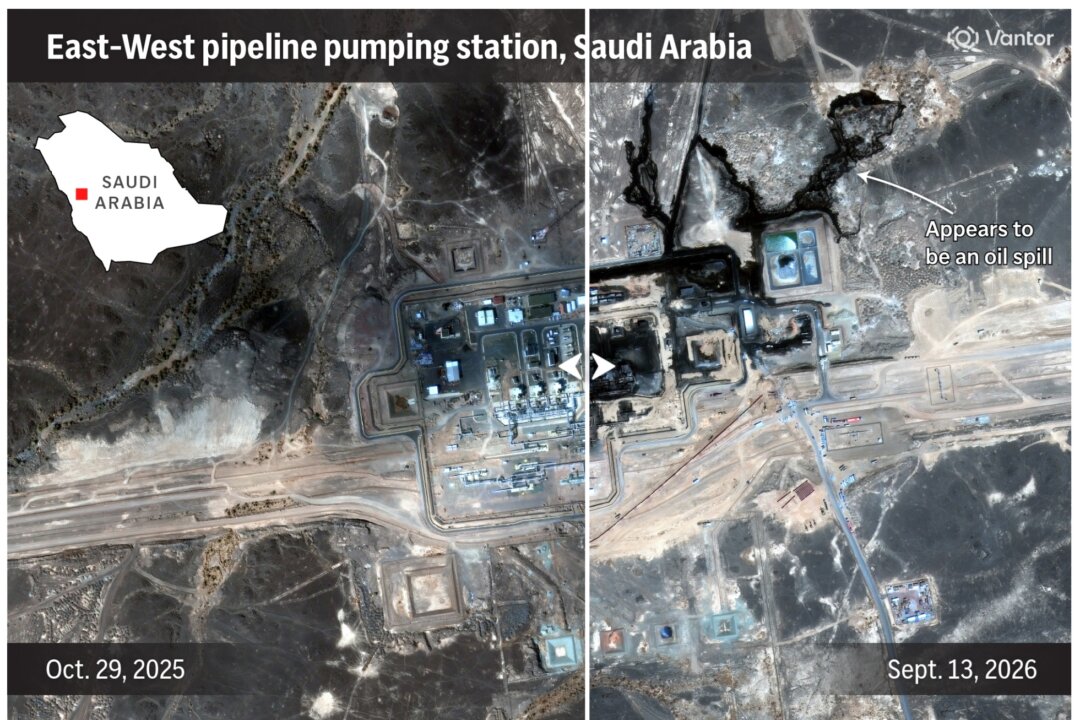
Saudi Arabia’s East–West crude oil pipeline could remain out of service for weeks after last week’s drone attack, according to industry analysts. This has raised fresh concerns over the security of one of the kingdom’s most important oil export routes as regional tensions continue to escalate.
The pipeline was shut down following a Sept. 11 drone attack by the Iran-backed Houthi terrorist organization in Yemen.
Owned by Saudi Aramco, it carries crude from the Abqaiq oil field in eastern Saudi Arabia to the Red Sea port of Yanbu, allowing the kingdom to export oil while bypassing the Strait of Hormuz.
According to Aramco, the pipeline has a maximum capacity of 7 million barrels of crude per day.
Saudi authorities have not said when operations will resume, but industry figures have warned the disruption may not be brief.
Craig Steinke, co-founder and chief executive of BluEnergies Ltd., a West Africa deepwater oil and gas exploration company, said on Sept. 14 that the pipeline “may take weeks to come online.”
The Epoch Times reached out to Aramco for further comment but didn’t receive a response by publication time.
The outage comes as Saudi Arabia has shifted more of its crude exports away from the Persian Gulf following Iranian attacks that disrupted shipping through the Strait of Hormuz, increasing the strategic importance of routes leading to the Red Sea.

A map showing where the East-West oil pipeline in Saudi Arabia was struck. AP Digital Embed
Oil prices rose more than 2 percent on Sept. 14 following the pipeline closure and continued Houthi attacks on Saudi infrastructure.
Houthi Attacks Continue
The pipeline strike is part of a broader campaign of Houthi attacks targeting Saudi territory and infrastructure.
Recent Houthi attacks have included strikes targeting Saudi energy infrastructure and civilian areas in Jazan, Abha, Khamis Mushait, and Najran, according to Saudi authorities.
Saudi Press Agency said a Sept. 12 projectile attack in Jazan injured two people and damaged a mosque, buildings, and vehicles.
Houthi military spokesperson Brig. Gen. Yahya Saree said in a Sept. 14 post on X that the group had attacked military facilities at King Khalid Air Base in Khamis Mushait.
Saudi officials disputed that characterization, saying civilian locations had been targeted instead.
Saudi military spokesperson Gen. Turki al-Malki said on Sept. 14 that missile and drone attacks on Khamis Mushait, Abha, and Taif injured 13 civilians and damaged seven homes and two vehicles.
Separately, Saree said Houthi forces had intercepted two Saudi fighter formations consisting of Typhoon and F-15 aircraft over Saada Governorate using locally produced air-defense missiles, forcing them to turn back. Saudi authorities had not publicly responded to that claim.
Regional Condemnation
The attacks prompted condemnation from governments across the region.
According to statements published by the Saudi Press Agency, Lebanon, Turkey, the United Arab Emirates, Sudan, and Pakistan condemned the attacks on Saudi Arabia’s infrastructure and expressed support for the kingdom.
Bahrain’s Ministry of Foreign Affairs also strongly condemned what it described as “the terrorist attacks carried out by the Iranian-backed Houthi terrorist militia” against Khamis Mushait, Abha, and Taif on Sept. 14.
The ministry called on the U.N. Security Council to take “a firm stance” against repeated Houthi attacks and to implement relevant Security Council resolutions.
The military escalation comes as Saudi Arabia seeks broader international cooperation to secure shipping lanes across the Red Sea, Bab al-Mandeb Strait, and Strait of Hormuz.
The Saudi Ministry of Defense hosted a meeting in July attended by chiefs of staff or their representatives from 43 countries, as well as a European Union delegation.
According to the ministry, participants agreed that military planners from interested countries would continue work on establishing a proposed multinational maritime defense coalition.
Saudi Arabia, Kuwait, Bahrain, Qatar, Pakistan, Türkiye, Egypt, Jordan, Yemen, Bangladesh, Nigeria, Sudan, Djibouti, and Somalia later issued a joint statement supporting the initiative and welcoming agreement on its foundational arrangements.
Reuters contributed to this report.







Palau’s President Says US Security Partnership Is Essential as China Pressures Island Nation
KOROR, Palau—When Surangel Whipps Jr. was pursuing an MBA at UCLA in...

Trump Nominates Republican Congressman Wesley Hunt as Ambassador to Saudi Arabia
Rep. Wesley Hunt (R-Texas) in Trinity, Texas, on Feb. 19, 2026. Madalina...

US Will Not Ban Oil Exports, Interior Secretary Says at G20 Energy Meeting
U.S. Interior Secretary Doug Burgum told reporters on Monday that the United...

Hanson Stands Firm After Calling Indigenous Culture ‘Primitive’
Pauline Hanson has refused to apologise for comments calling Indigenous Australians the...