
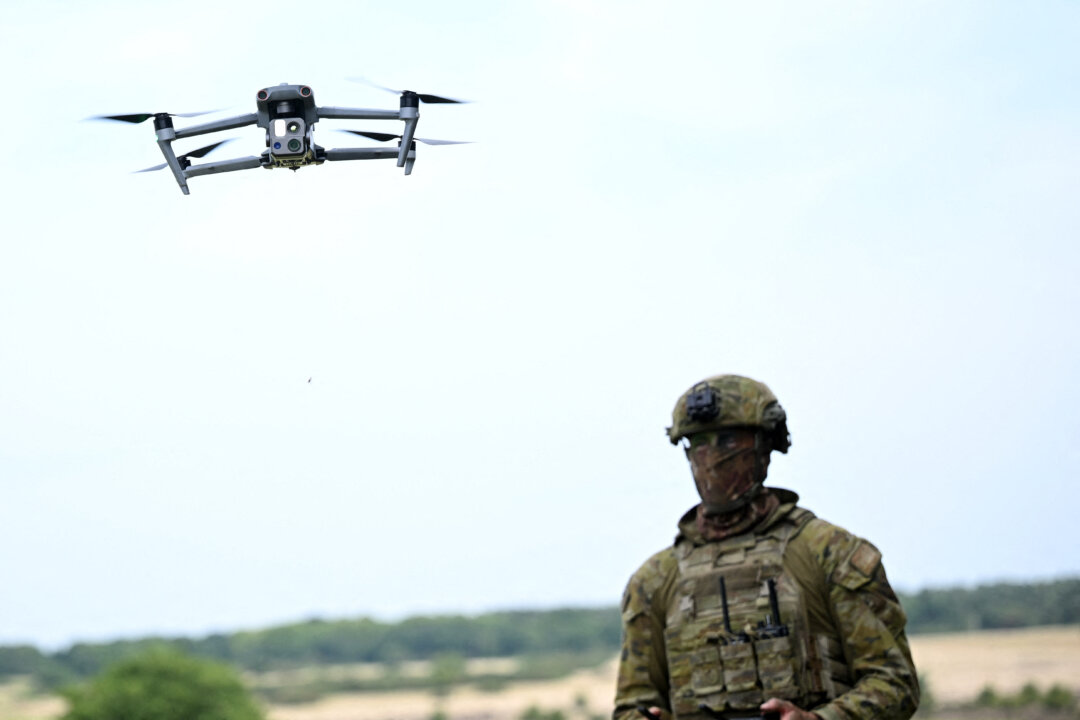

From lasers to artificial intelligence, the Australian Defence Force has unveiled its six priority technologies for times of rapidly evolving warfare.
The 2026 Defence Innovation Science and Technology Strategy was formally unveiled on Aug. 4, setting out a decade-long road map for turning research into battlefield capability.
Long-range fires and hypersonic weapons, high-energy lasers, autonomous systems, quantum technologies, artificial intelligence and undersea warfare rounded out the Australian Defence Force’s priority wishlist to industry and researchers.
The strategy would allow Australia to stay afloat in an age of rapid technological change and asymmetric warfare, Defence Minister Richard Marles said.
“Technology is reshaping warfare at a pace we have never seen before,” he said.
“The lessons from conflicts around the world are clear: nations that can innovate faster and adopt new technologies more effectively will have a decision advantage.”
The strategy seeks to leverage hard-won lessons from ongoing global conflicts and capabilities of Australia’s regional neighbours.
Defence chief Admiral Mark Hammond pointed to the war in Ukraine as a case study, noting a swarm of 117 cheap drones worth about $1,000 (US$700) each had inflicted about $7 billion in damage on Russia’s strategic bombing fleet.
The June 2025 attack, dubbed Operation Spiderweb, was hailed as a strategic coup and demonstration of the ability of autonomous weapons to inflict outsized damage.
Uncrewed surface and underwater vessels had similarly reshaped naval warfare in the Black Sea, Adml Hammond said.
“Development of technologies that either leverage these capabilities or counter those capabilities is a much-needed value add for the Australian Defence Force,” he said.
Australia is facing a rapidly changing defence environment in which its regional isolation is no longer a major asset, the strategy argues.
“Australia’s traditional geographic advantages are eroding as regional military capabilities increase in range, speed, and sophistication,” the latest report reads.
“Economic pressures, climate impacts, and compounding social and technological change further complicate the security landscape.”
The priorities outlined in the strategy document released on Aug. 4, like its 2024 predecessor, were informed by the national defence strategy.
Chief Defence Scientist Tanya Munro said the strategy was less about identifying new priorities than finding ways to ensure the ADF derives benefits from them.
“Today’s strategy marks an evolution, not a revolution,” she said.
“What has changed is the environment.”
Marles said the strategy would build on Australia’s efforts to build its sovereign capabilities and bolster regional security.
In April, Marles announced Australia would increase its military spend by $53 billion over a decade towards a goal of 3 percent of GDP by 2035 under NATO calculation methods.
The new defence strategy was launched in conjunction with the 2026 Australian Defence Science, Technology and Research Summit in Adelaide.
By Nick Wilson in Melbourne