Aviva Klompas: Palestinians deserve the dignity of accountability
 Special to National PostUpdated 7 hours Ago3 Mins read
Article content
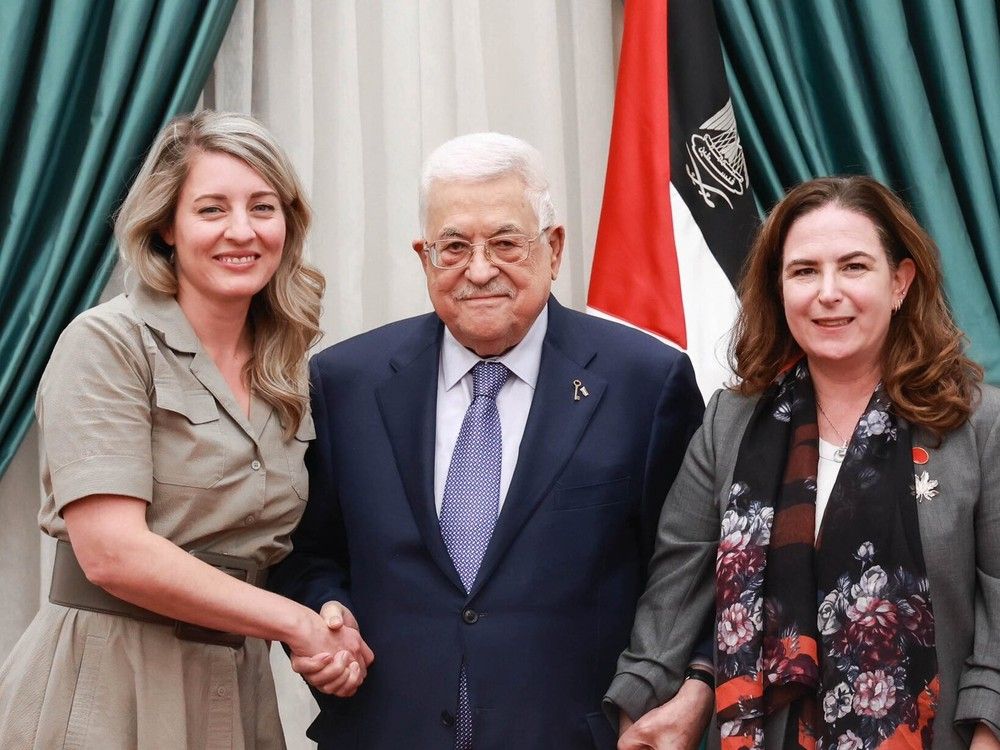
On July 30, 2025, Prime Minister Mark Carney announced that Canada would recognize a Palestinian state. He was careful to explain that recognition was not unconditional.

THIS CONTENT IS RESERVED FOR SUBSCRIBERS
Enjoy the latest local, national and international news.
- Exclusive articles by Conrad Black, Barbara Kay and others. Plus, special edition NP Platformed and First Reading newsletters and virtual events.
- Unlimited online access to National Post.
- National Post ePaper, an electronic replica of the print edition to view on any device, share and comment on.
- Daily puzzles including the New York Times Crossword.
- Support local journalism.
SUBSCRIBE FOR MORE ARTICLES
Enjoy the latest local, national and international news.
- Exclusive articles by Conrad Black, Barbara Kay and others. Plus, special edition NP Platformed and First Reading newsletters and virtual events.
- Unlimited online access to National Post.
- National Post ePaper, an electronic replica of the print edition to view on any device, share and comment on.
- Daily puzzles including the New York Times Crossword.
- Support local journalism.
REGISTER / SIGN IN TO UNLOCK MORE ARTICLES
Create an account or sign in to continue with your reading experience.
- Access articles from across Canada with one account.
- Share your thoughts and join the conversation in the comments.
- Enjoy additional articles per month.
- Get email updates from your favourite authors.
THIS ARTICLE IS FREE TO READ REGISTER TO UNLOCK.
Create an account or sign in to continue with your reading experience.
- Access articles from across Canada with one account
- Share your thoughts and join the conversation in the comments
- Enjoy additional articles per month
- Get email updates from your favourite authors
Sign In or Create an Account
or
Article content
Canada’s decision, Carney said, was predicated on commitments from Palestinian Authority President Mahmoud Abbas to fundamentally reform Palestinian governance, hold general elections in 2026 in which Hamas could play no part and demilitarize a future Palestinian state.
Article content
Article content
Article content
These conditions never answered the most obvious objection to Canada’s policy: Why recognize a state before the institutions capable of governing it peacefully and democratically actually exist?
Article content
By signing up, you consent to receive the above newsletter from Postmedia Network Inc.
Article content
Canada went ahead and did it anyway.
Article content
There is a curious double standard at the heart of Canada’s policy toward the Israeli-Palestinian conflict. Israel is treated as a country whose leaders make choices and must live with their consequences. Palestinians are treated as a people to whom history happens.
Article content
Consider the typical diplomatic discussion surrounding the conflict. Israel must accept a ceasefire, restrain its military, halt settlement expansion, negotiate with its enemies, make territorial concessions and articulate a credible political horizon. Some of those demands are reasonable and others can be debated, but they all make it clear that Israel possesses agency.
Article content
Now, consider the expectations placed on Palestinian leaders.
Article content
Mahmoud Abbas was elected president in 2005 and has remained in office ever since, despite repeatedly promising to hold elections. Hamas spent years turning Gaza into a terrorist stronghold before launching the deadliest attack against Jews since the Holocaust. Palestinian politics remain fractured, corruption is endemic within the Palestinian Authority and its education system continues to glorify violence and deny the Jewish people’s historical connection to the land.
Article content
Article content
Yet the diplomatic dogma remains overwhelmingly focused on what everyone else should do for Palestinians. Israel should change its policies and tactics. Washington should exert more pressure on Israel. Western governments should recognize Palestine, the United Nations should confer greater legitimacy and donor countries should provide more assistance.
Article content
Article content
What, precisely, are Palestinian leaders expected to do? Expecting nothing is not allyship, it’s paternalism.
Article content
If Palestinians are entitled to sovereignty, as the Carney government believes they are, then Palestinian leaders should be responsible for building the institutions that make sovereignty viable.
Article content
They should be responsible for whether their people vote, whether public money rewards violence, whether schools prepare children for co-existence and whether their political culture treats negotiation and compromise as diplomacy or betrayal.
Article content
None of this absolves Israel of responsibility for its actions. It is held accountable for the decisions of its elected government because that is what it means to treat a nation as a sovereign political actor. Palestinians deserve the same standard.




‘Serious’ critique of Carney is what loyalty to Canada looks like, Tory critic says
Article contentCarney has said Canada would not sacrifice economic or cultural sovereignty....

Chris Selley: Revoking the Stanley Cup from the NHL is a trade-war bargaining chip worth trying
Instead of judging each other’s travel and consumer preferences during our dispute...

How often should you shower? The personal hygiene myth that leaves us dry
A long, hot shower every day can be damaging to your skin,...
Rob Breakenridge: Pierre Poilievre ably makes the case for Canada, in America
Conservative Party of Canada leader Pierre Poilievre speaks during a news conference...