Thanks to BC’s snap election, Canadians won’t know for at least another month whether the RCMP division that policed Fairy Creek and Wet’suwet’en protests needs reform.
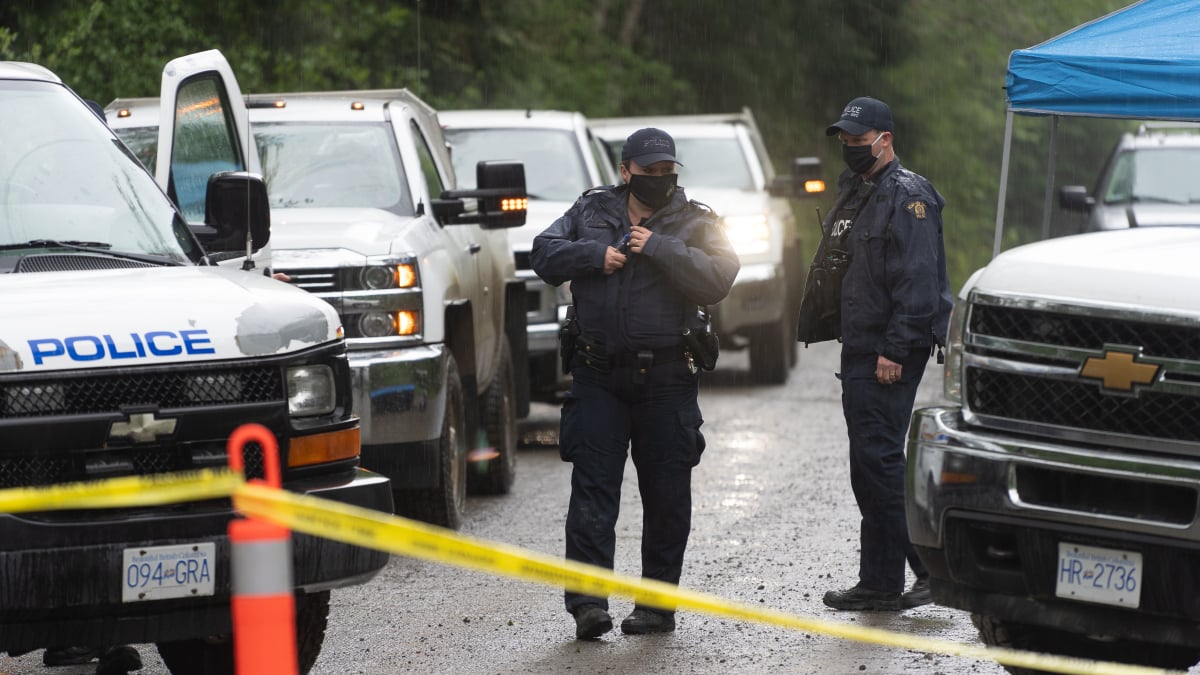
For the past three years, Canada’s police watchdog, the Civilian Review and Complaints Commission of the RCMP (CRCC), has been investigating the police force’s Community-Industry Response Group (C-IRG) actions at three protests in the province between 2017 and 2022.
The review examined the force’s actions at the Fairy Creek watershed anti-logging protests on Vancouver Island, at a protest on the Salisbury Creek Forestry Road in the Kootenays and along the Coastal GasLink pipeline route in Wet’suwet’en territory in northern BC. In each case, protesters and observers have accused the unit of using excessive force and suppressing media as it enforced injunctions on behalf of logging and gas companies.
The final report was initially due to be released Wednesday, APTN reported this week. However, in an email, a spokesperson for the watchdog said it won’t publish the document until after BC’s provincial election on Oct. 24.
“During an election period, the provincial government operates under caretaker conventions, which limit its ability to address or respond to matters that could be viewed as involving policy, administration, or future government decision-making,” a spokesperson wrote.
“Publishing the report while the province is in caretaker mode would therefore make it difficult for the relevant provincial authorities to fully consider and respond to its findings and recommendations. To ensure the report receives appropriate consideration and to avoid any perception of interference in the election period, we have decided to delay publication until a new government has been sworn in and normal government operations have resumed.”
The C-IRG was created in 2017 to “provide strategic oversight in addressing energy industry (gas and oil pipeline) incidents and related public order, national security and crime issues. Its mandate was to ensure a consistent, standardized and impartially administered police response across the province, using a measured approach in facilitating the peaceful resolution of public order issues,” according to the force’s website.
The unit changed its name in 2024 to become the Critical Response Unit BC.
The CRCC is a federal agency distinct from the RCMP and is tasked with investigating complaints against the force. Its charter mandates the organization to hold the police force accountable for its actions and those of individual officers.
The agency opened the investigation after receiving hundreds of complaints about the C-IRG’s actions at the three protests, with the goal of assessing whether officers followed the law, Canada’s Charter of Rights and internal police guidelines. It was also tasked with evaluating whether the unit’s actions aligned with Canadian and BC commitments to the UN Declaration on the Rights of Indigenous Peoples and the calls for justice issued by the inquiry on missing and murdered Indigenous women.
However, within months, it slammed the RCMP for dragging its feet on providing documents and slowing the investigation. In November 2023, seven months after the investigation started, the agency published an update noting that it experienced “significant delays in receiving the relevant materials from the RCMP,” despite repeatedly requesting them.
The investigation comes after the BC Supreme Court found the unit acted “unlawfully,” including in its use of media exclusion zones at the Fairy Creek anti-logging protests on Vancouver Island between 2020 and 2021. The protest was the largest act of civil disobedience in Canadian history, and saw at least 1,188 arrests.
The unit’s actions are also at the heart of an ongoing lawsuit brought by The Narwhal over its arrest of photojournalist Amber Bracken at a land defender’s camp on Wet’suwent’en territory in 2021. The violent arrest — which involved heavily-armed officers breaking into a cabin at the camp — was widely condemned as an assault on journalists and media independence.
September 24th 2026