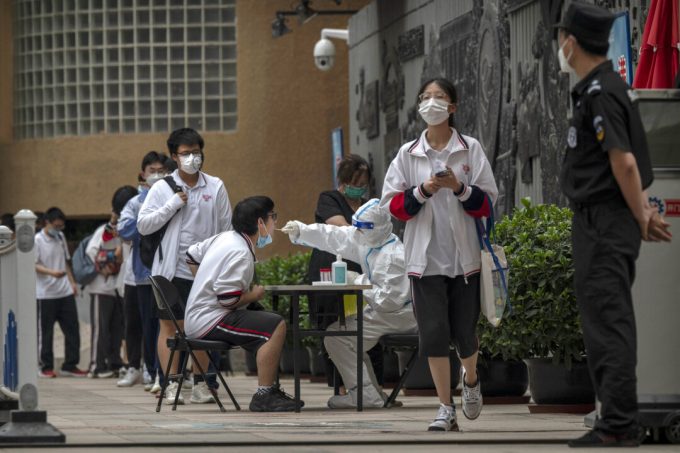

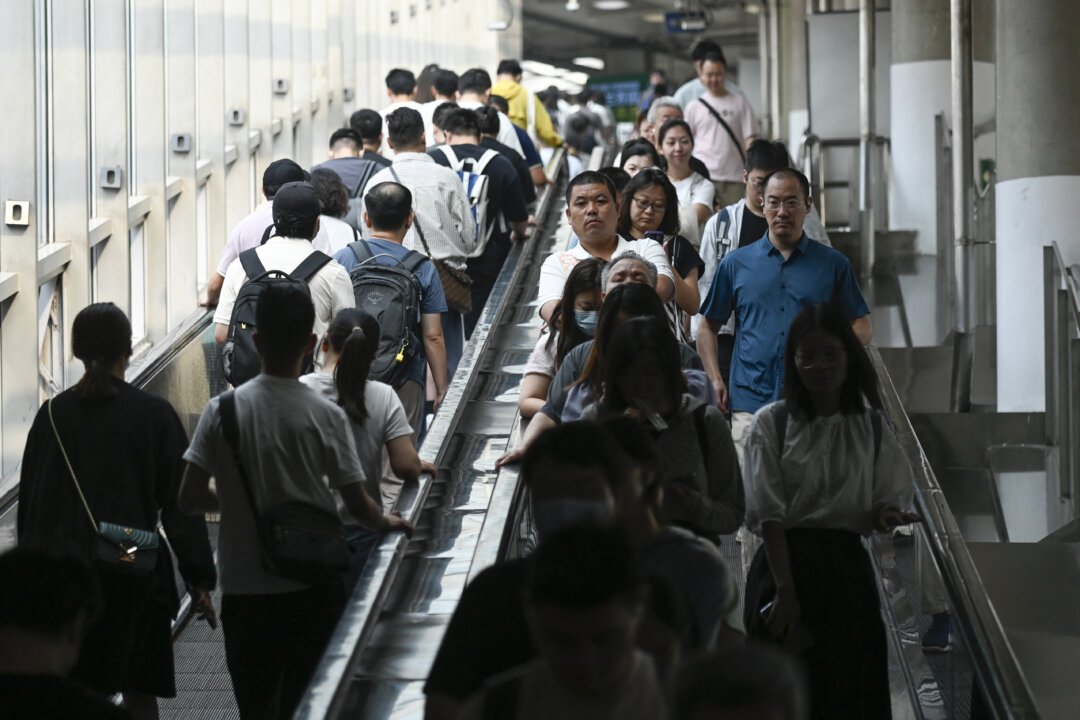

Beijing has unveiled new border rules aimed at halting critical technology outflows and crushing dissent at home and abroad, experts warn.
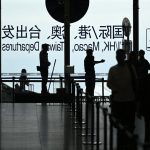
According to regulations issued by China’s State Council on July 31, authorities can bar citizens from departing if they are deemed to pose a threat to industrial or technological security.
The measures also subject returning nationals to exit bans of six months to three years for overseas activities deemed to endanger national security and interests.
Relevant agencies are required to provide written reasons for an exit restriction but are not required to notify individuals when cases involve national security.
The 19-part set of rules takes effect on Sept. 15.
Politics and Tech Theft
Shen Ming-shih, a research fellow at Taiwan’s Institute for National Defense and Security Research, said the regulations’ timing is highly sensitive and likely reflects political motives.
“The Chinese Communist Party is preparing for the upcoming Fifth Plenum and its 21st National Congress. Officials don’t want insiders leaving the country during this period,” Shen told The Epoch Times.
“Some of the government figures know sensitive details about China’s technological capabilities and could share them with foreign powers, especially the United States.”
The Fifth Plenum of the 20th Central Committee—focused on advancing the regime’s internal discipline—will
in October.
The 21st National Congress will take place in 2027, a twice-a-decade gathering that will
the Chinese Communist Party’s (CCP’s) lineup and political direction for the next five years, with Xi Jinping widely expected to seek a fourth term.
Shen said intensifying political
within the regime has prompted some Party elites to seek ways to flee abroad, and Beijing could use the new rules to block their departures.
The rules could also tie into allegations from Washington and tech companies that China has
American technology, according to Shen.
“If someone steals such information in the United States and later returns to China, Beijing can invoke the rules to shield them from federal authorities,” he said.
“This prevents leverage from falling into foreign hands and saves Beijing from offering any pretext for retaliation.”
U.S. Treasury Secretary Scott Bessent told Fox Business on July 21 that the Trump administration will investigate whether Chinese artificial intelligence (AI) models have been distilled from U.S. models, a probe that could lead Washington to sanction Chinese companies over intellectual property theft.
Blocking Knowledge Outflows
Months before issuing the new provisions, China’s National Development and Reform Commission (NDRC) summoned Manus CEO Xiao Hong and chief scientist Ji Yichao to Beijing, then barred them from leaving the country.
Manus is a Singapore-based AI startup originally founded in China.

Illustration of Manus, an autonomous artificial intelligence agent developed by the Chinese startup Monica, on May 15, 2025. The general AI agent. Riccardo Milani/Hans Lucas via AFP via Getty Images
The NDRC announced in April that it had
Meta’s proposed acquisition of Manus by prohibiting the foreign investment involved in the deal.
Feng Chongyi, an associate professor in China studies at the University of Technology Sydney, told The Epoch Times that as trade competition between Beijing and Washington
, the CCP aims to prevent departing personnel from taking technology know-how abroad.
“The regime wants to maintain economic competitiveness and prevent technology outflows,” Feng said.
“After stealing Western technology, they made countering developed nations their top priority.”
Similarly, Shen said Xi’s
on AI development at the World Artificial Intelligence Conference in July reflects Beijing’s determination to keep startup-controlled technologies out of foreign hands.
“Beijing does not want other countries discovering the current state of its technological development,” he said.
“Of course, the CCP is also unwilling to expose its technology abroad, which would severely impact its priority industries.”
Chilling Effect
Feng said Beijing intends to exploit the new rules to bar critics from leaving the country, sending a warning to dissenting voices as a
fuels growing public discontent.
“The regime can restrict your departure without providing a clear reason, further tightening control over citizens’ speech,” Feng said.
“Authorities are preemptively deploying these countermeasures to reinforce stability.”
Feng said Beijing could combine the regulations with the Ethnic Unity and Progress Promotion Law—enacted on July 1 in a move critics warn could
ethnic Chinese people worldwide—to sharply clamp down on critical speech.
“Ordinary citizens expressing sympathy online for Tibetans or Hongkongers could inadvertently commit a crime and face an exit ban, even if such remarks fall under freedom of expression abroad,” Feng said.
“Through these rules, the CCP exercises unchecked legal power, leaving people uncertain about what speech could lead to arrest and deeply fearful of challenging the regime.”
Feng warned that while the regulations cap border restrictions at three years, authorities could arbitrarily alter the legislation at any time.
“For example, my student Yang Hengjun was supposed to receive life imprisonment after his suspended death sentence expired, but officials never announced the verdict and delayed the decision,” he said.
“This proves China’s legal system is merely a political tool; even if these provisions are written in black and white, Beijing can modify them at will.”
Yang, a Chinese-born Australian writer, has been detained in China on espionage charges since 2019. Beijing
him a suspended death sentence in 2024, with the two-year reprieve expiring in February.
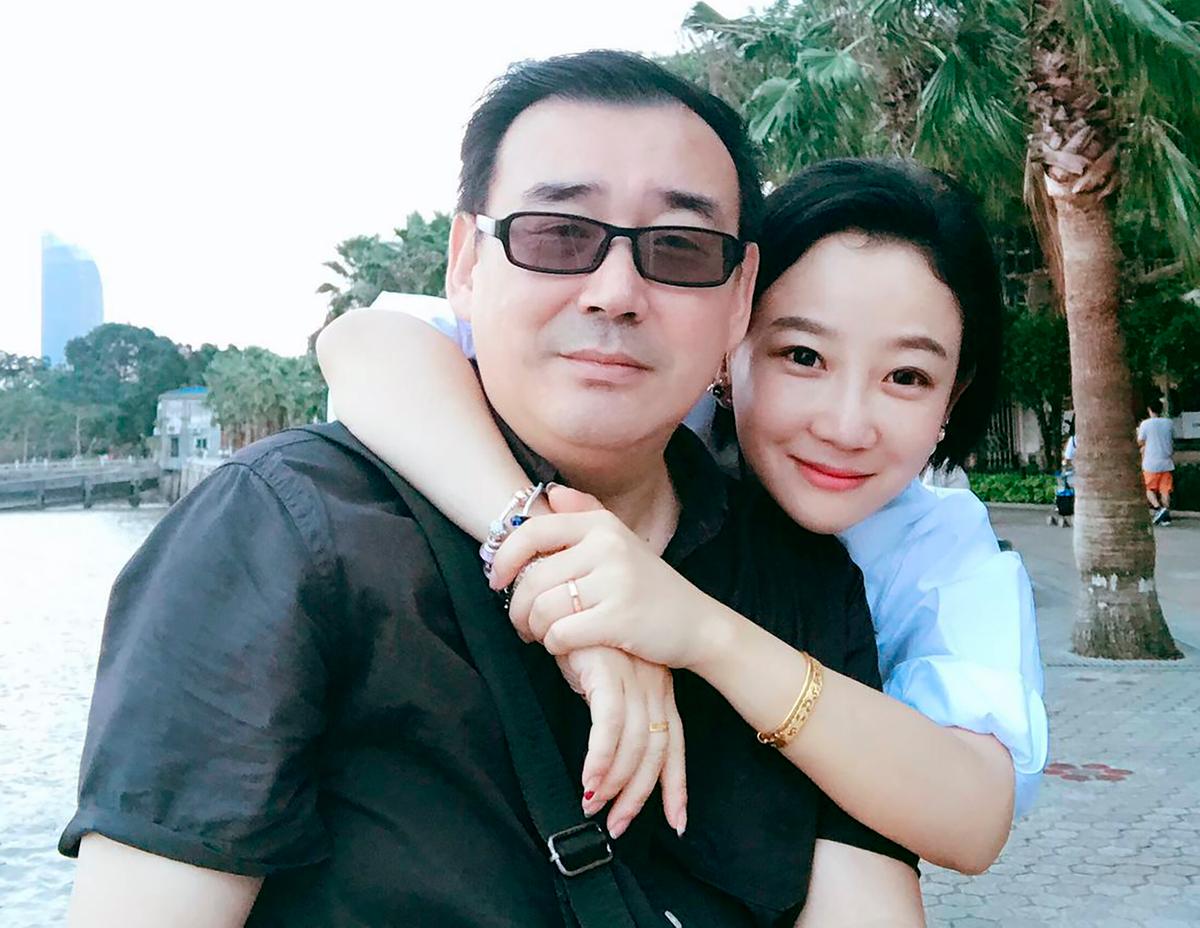
Yang Hengjun, left, poses with a family member in Beijing in 2017. Courtesy of the Yang family via AP
Feng, an Australian-based Chinese professor, was barred from leaving China for a week in 2017 over allegations of endangering national security.
Shen warned that the new rules will have a profound chilling effect on Chinese society.
“Citizens at home and abroad will become extremely cautious about their speech and actions,” he said.
“Freedom of speech is nearly gone, leaving people exposed only to the CCP’s official narrative.”