

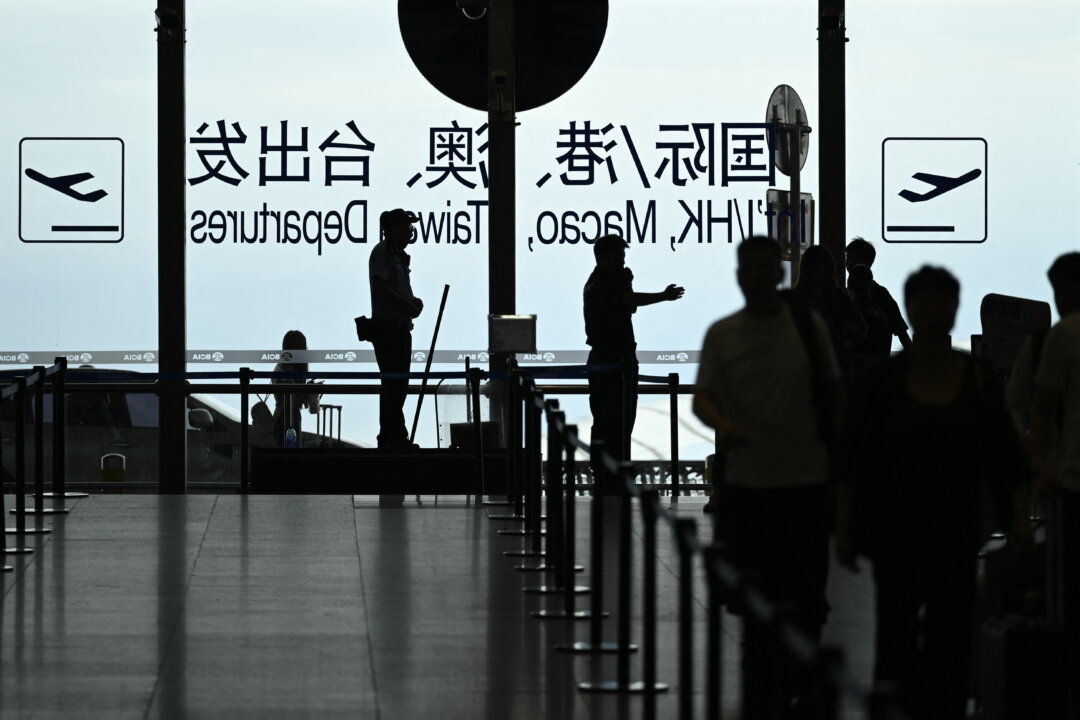

China has begun testing new exit-control measures ahead of a nationwide regulation that will give the regime broader powers to question travelers, verify their reasons for leaving the country, and access related documents and electronic data, according to a Chinese Communist Party (CCP) insider.
The insider and other China-based individuals spoke to The Epoch Times on condition of anonymity out of fear of reprisal.
The new rules, issued by China’s State Council, are scheduled to take effect on Sept. 15. However, multiple international airports and land border crossings have already begun implementing the measures on a trial basis since Aug. 1, according to the insider.
The measures appear to focus particularly on travelers heading to Southeast Asian countries, including Burma, Cambodia, Laos, Vietnam, and Thailand, as well as employees in sensitive industries such as finance, technology, semiconductors, and AI, the insider said.
Under the new procedures, travelers may be asked to provide identification documents and additional materials explaining their travel purposes, itineraries, and other relevant information.
The insider revealed that border authorities have expanded inspections at international airports and land crossings, with officials making additional checks based on a traveler’s occupation, destination, and records in government databases.
“The regulation has not officially taken effect, but border checkpoints have already begun implementing it ahead of schedule,” he said.
Greater Scrutiny
The new exit controls have drawn particular attention among employees in China’s tech sector.
The insider said the CCP is paying closer attention not only to engineers and researchers but also to ordinary employees at companies involved in technology, AI, and semiconductor industries.
China has not publicly released a detailed list of restricted industries or individuals, allowing border officials broad discretion when conducting inspections, according to a Chinese tech worker who spoke with The Epoch Times under the surname Ding.
“Border officers can verify a traveler’s identity based on internal documents,” Ding said. “With government data systems now connected, it is easy to check a person’s background. If your answers do not match the information they have, you may not be allowed to leave.”
The new regulation gives Chinese border authorities expanded investigative powers, including the ability to question individuals, verify the purpose of travel, and request documents, information, and electronic data.
Recent posts on Chinese social media suggest that some local police stations have begun contacting residents to verify overseas travel history, current employment information, and other personal details.
One internet user claimed that police asked him whether he had traveled overseas before and requested information about his current city and employer. The police also allegedly asked him to take a photograph holding his identification card and a same-day lottery ticket image, captured with a timestamped camera app, outside a state office or police station.
The authenticity of the online post could not be independently verified by The Epoch Times.
Expanding Exit Restrictions
The new restrictions have also affected outbound tourism.
Travel agencies in China have received instructions to strengthen identity checks for customers joining overseas tour groups, according to a travel agency employee who spoke to The Epoch Times.
The employee in Guangzhou, surnamed Liu, said some customers were required to provide approval letters from their employers or neighborhood offices before joining overseas tours.
The purpose, Liu said, is to prevent travelers from leaving China and failing to return.
“There are people who hold foreign passports or have overseas assets,” he said. “Some agencies are concerned that people may leave through tourism channels and not come back.”
Images circulated online also appeared to show new requirements for some individuals classified as “registered personnel”—a category that includes certain state employees and workers in sensitive positions—when applying for passports.
According to the images, applicants may be required to provide a letter from their employer approving the issuance of travel documents. The letter template requires information including the applicant’s name, ID number, position, and type of travel document requested, along with an official stamp from the employer.
The new exit controls have also raised concerns among some wealthy Chinese citizens with assets overseas.
A Shanghai businessman, surnamed Guo, told The Epoch Times that some wealthy individuals have recently consulted overseas lawyers to explore ways to protect their assets.
“People with money are trying to deal with their overseas assets,” Guo said.
China has long used measures such as passport controls, employer approvals, travel restrictions, and border alerts to limit overseas travel for certain groups, including some state employees and individuals considered politically sensitive.
The latest regulation appears to expand the scope of scrutiny beyond those traditionally restricted groups, extending attention to tech workers, financial professionals, tourists, and members of travel groups.
The CCP insider said the regime is expected to showcase several enforcement cases before the Sept. 15 implementation date in order to send a warning to the public.
Jiang Fei contributed to this report.