

Israeli Prime Minister Benjamin Netanyahu said Israel will not withdraw from its current military positions in Gaza until Hamas is fully disarmed, while mediators work to turn a U.S.-backed framework into a permanent postwar security arrangement for the territory.
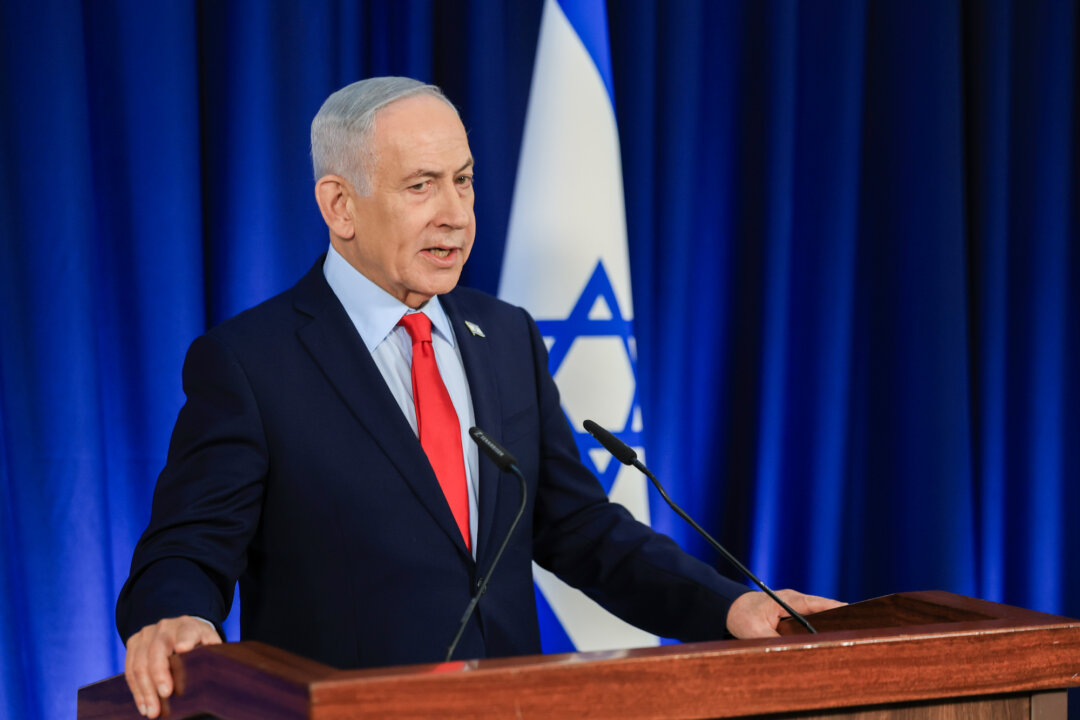
In a video message posted on Facebook on Aug. 4, Netanyahu said the Israel Defense Forces (IDF) has been instructed to “do whatever is needed” to protect Israeli soldiers, territory, and civilians.
His comments came after U.S. President Donald Trump announced on July 30 that the Board of Peace had reached an agreement to fully disarm Hamas and all other armed groups in Gaza under a broader U.S.-backed plan to end the war and establish civilian governance in the territory.
“President Trump and his team believe they can bring about Hamas’s disarmament and the demilitarization of Gaza,” Netanyahu said in the video update. “We are examining that.”
He said the United States had presented Israel with a draft proposal, but added that the Israeli government had already submitted its comments before media reports about the negotiations emerged.
Negotiations
The U.S.-led Gaza peace plan envisions Hamas relinquishing its weapons, transferring civilian authority away from armed groups, and implementing security arrangements overseen by an international monitoring mechanism.
The Board of Peace said in an Aug. 3 post on X that representatives met Netanyahu and his team in Jerusalem to discuss implementation of the agreement.
“The goal is clear and is not in question: the complete decommissioning of weapons in the Strip and the transition away from rule by the gun to civilian governance,” the board said. “Reaching it will be a process.”

President Donald Trump welcomes Israeli Prime Minister Benjamin Netanyahu to his Mar-a-Lago club in Palm Beach, Fla., on Dec. 29, 2025. Joe Raedle/Getty Images
The organization also rejected reports suggesting Israel would withdraw before Hamas surrendered its weapons.
Citing the board’s statement, High Representative Nikolay Mladenov acknowledged that negotiations had entered a more difficult stage following his Aug. 3 meeting with Netanyahu.
“Not much of what we do now is dramatic. It is slow, grinding and technical work,” he said in an Aug. 3 post on X.
Military Operations Continue
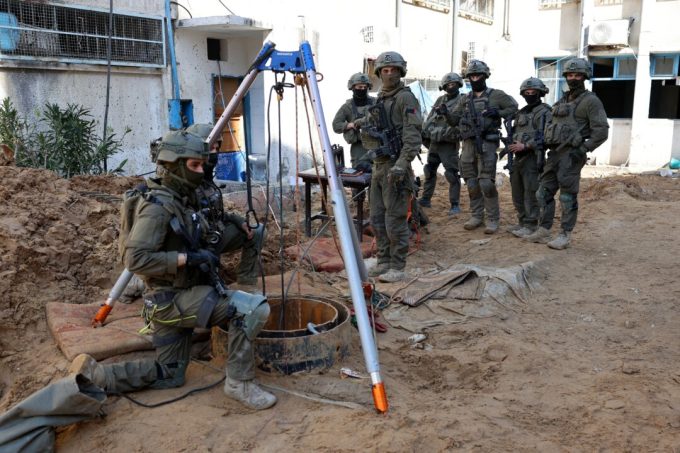
Despite ongoing diplomatic efforts, Israeli military operations have continued across Gaza as officials insist military pressure remains necessary until Hamas fulfills its commitment to disarm.
The IDF said in an Aug. 3 post on X that it had killed two Hamas commanders during operations in Gaza.
Earlier, on Aug. 1, the IDF said it had dismantled five Hamas weapons storage facilities, including one located adjacent to Al-Aqsa Martyrs Hospital in Deir al-Balah. According to the military, the site contained Kalashnikov rifles, anti-tank launchers, explosive devices, ammunition and other military equipment.

Palestinians inspect the site of an Israeli strike on a vehicle, according to medics, in Deir al-Balah in the central Gaza Strip, Aug. 2, 2026. Mahmoud Issa/Reuters
However, the Hamas-run Gaza Health Ministry said in an Aug. 1 statement that Israeli strikes targeted medicine warehouses serving the hospital.
The ministry said on Aug. 5 that four additional deaths and one injury had been recorded during the previous 24 hours. It said the cumulative death toll since the war began on Oct. 7, 2023, had reached 73,381, with 174,231 people injured.
The Epoch Times couldn’t independently verify the ministry’s statements and figures.
About 1,200 people, most of them civilians, were killed in the Hamas-led attack on Israel on Oct. 7, 2023. Since then, 966 Israeli soldiers have been killed, according to the latest IDF casualty update.
The U.N. Office for the Coordination of Humanitarian Affairs said on Aug. 4 that Gaza remains unsafe for civilians as Israeli attacks continue, including on schools and classrooms.
The Epoch Times reached out to the Israeli government press office for comment but didn’t receive a response by publication time.

Palestinians inspect the site of an Israeli strike on a residential apartment, according to medics, in Gaza City, Aug. 2, 2026. Dawoud Abu Alkas /Reuters
Approval for Targeted Strikes
The IDF also said an Aug. 2 airstrike killed Salem Jamal Abd al-Rahman Abu Labad, whom it identified as a Hamas operative involved in the Oct. 7 attack on Kibbutz Nir Oz.
“Two days of strikes across Gaza have killed civilians and destroyed medical supplies that people depend on,” Mladenov said in an Aug. 2 post on X.
He said the violence came despite intensive mediation by Egypt, Qatar, Turkey, the United States and the Board of Peace to implement the Gaza peace plan.
“Both parties carry obligations under the Comprehensive Plan and the Sharm El Sheikh deal that secured the release of all hostages,” Mladenov said.

Board member Nikolay Mladenov speaks after the signing of a Board of Peace charter during the World Economic Forum meeting in Davos, Switzerland, on Jan. 22, 2026. Evan Vucci/AP
Senior Israeli officials told Epoch Magazine Israel that the military has also tightened approval procedures for targeted strikes during the negotiations.
The officials said IDF Chief of Staff Lt. Gen. Eyal Zamir now requires personal approval for every strike targeting a senior Hamas figure, replacing the previous system under which such operations could be approved by the head of Southern Command.
They said Zamir must also receive approval from Israel’s political leadership before such operations proceed.
According to the officials, the directive followed a request from Mladenov to suspend Israeli strikes for two weeks while negotiations over Hamas’s disarmament continue.