Canada Pledges $82 Million for Ocean Protection
 Jennifer CowanUpdated 2 hours Ago2 Mins read
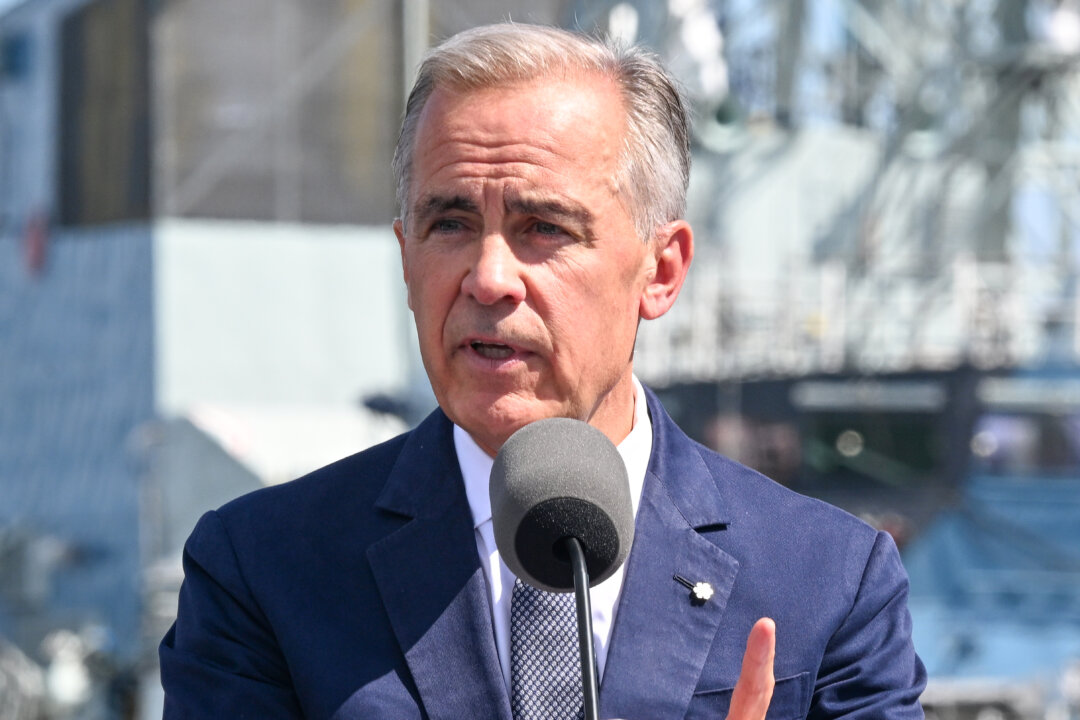

Prime Minister Mark Carney speaks as he announces a $11.3 billion contract for icebreakers at the Davie shipyard in Levis, Quebec, on Aug. 24, 2026. The Canadian Press/Jacques Boissinot
Canada is committing $82 million over five years to expand ocean observation and data collection, Prime Minister Mark Carney announced Sept. 23.
The announcement, made on the sidelines of the United Nations General Assembly in New York, coincided with Canada becoming a party to the High Seas Treaty, a legally binding United Nations agreement aimed at conserving marine biodiversity and managing resources in areas beyond national jurisdiction. The agreement entered into force internationally in January 2026.
“Canada is an ocean nation. We have the world’s longest coastline as a consequence of that,” Carney said while speaking at the Sept. 23 launch of the OceanEye International Alliance, a global initiative to strengthen the Global Ocean Observing System (GOOS).
“That’s our inheritance, and we recognize the obligations, the responsibilities, that come with that to help lead efforts to understand those oceans, and of course, to protect them.”
Carney said the $82 million funding commitment will support year-round moorings in the Arctic Ocean, the use of autonomous underwater gliders beneath the ice, and expanded monitoring in the Labrador Sea and Davis Strait.
The funding will more than double Canada’s contribution to the global Argo ocean-observation network, he said.
The High Seas Treaty was adopted in June 2023, but individual nations must approve the treaty through their own domestic legal systems. The agreement entered into force on Jan. 17, 2026, after the required number of countries ratified or approved it.
Canada first signed the High Seas Treaty in March 2024 and ratified it on Sept. 23, 2026.
Carney said Canada’s ratification of the treaty is accompanied by more than $24 million in funding for marine biodiversity monitoring and management in international waters.
The first meeting of the treaty’s Conference of the Parties is scheduled for January 2027.
The treaty applies to areas beyond national jurisdiction, including the high seas and international seabed area. These areas cover roughly two-thirds of the global ocean.
The treaty establishes rules covering marine genetic resources, marine protected areas and other area-based management tools, environmental impact assessments, and capacity-building and the transfer of marine technology.
The treaty ratification coincided with the launch of OceanEye, the collaborative initiative that Carney is co-chairing with European Commission President Ursula von der Leyen. It is intended to strengthen support for the Global Ocean Observing System and expand the monitoring of the world’s oceans.
The European Commission president said 30 countries have pledged to support OceanEye.
The OceanEye International Alliance has a membership of 31 nations so far including the United Kingdom, France, Italy, and Germany. The United States is not among the members listed by the Canadian government.





Mother describes chaos and determination inside Belleville synagogue; suspect reportedly blamed Jews for COVID; and more
Sharlene Weitzman, right, and Jennifer Aronson, were among the roughly two dozen...

‘Broke all of our hearts’: Families give testimony at Kenneth Law sentencing
Article contentThe loved ones of Maurizio Vadala, who dies aged 36 in...

’You’re not killing him’: Jewish mother tells how she shielded son during Belleville synagogue shooting
Article contentAs people began to make their way inside the sanctuary for...
Michael Higgins: ICJ risks destroying credibility if it redefines genocide
This general view shows the logo of the International Court of Justice...