The Virtues of Canada’s Forbears Can Guide the Present, But Must Be Fostered
 David LivingstoneUpdated 2 hours Ago3 Mins read
Commentary
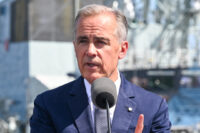
In an address entitled “Forward Guidance: A Stronger Canada,” posted on YouTube the other week, Prime Minister Mark Carney appealed to Canadian patriotism and civic virtue as he outlined the government’s response to U.S. tariffs.
Do Canadians still embody the virtues Carney says we need?
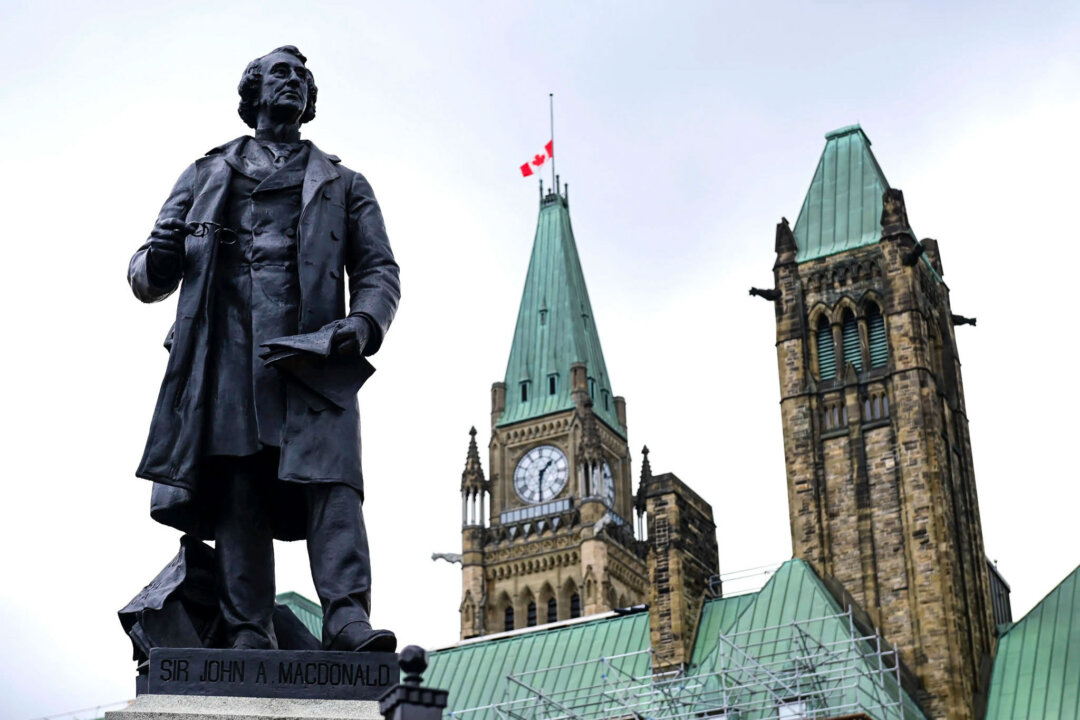
Surprisingly, Carney drew upon Canadian history and praised the nation-building ambition of Sir John A. Macdonald. He compared undertakings by the federal Major Projects Office to Macdonald’s nation-building Canadian Pacific Railway, the “iron spine” that “stitched together our country and made our presence undeniable.”
It is refreshing to hear a federal leader speak of Canada’s past as something noble and worth emulating. We heard little of this over the past decade. Too often, Canadians were admonished to view our history as a source of shame. Macdonald wasn’t praised; his statues were vandalized, removed, or boarded up in cities from Victoria to Charlottetown. Schools, parkways, and other public places were stripped of his name.
A generation has been taught to regard its past with suspicion rather than pride. Carney will have difficulty building a lasting, patriotic campaign unless our schools and universities once again teach Canadian history as something worth knowing, warts and all.
Previous federal governments have contributed to this retreat from national memory. Canadian passports, for example, once depicted important moments, such as Vimy Ridge—reminders of courage, sacrifice, and resilience. These were replaced in 2023 with images of snowflakes, leaves, and children jumping into lakes.
Yet Carney’s central message is that the virtues exemplified by earlier generations are precisely what Canada needs now. “Canada Strong,” he declared, “isn’t about just withstanding this crisis, it’s about coming out of it stronger, more resilient, more independent than when we started.”
Are contemporary Canadians prepared for the challenge? Have we cultivated the qualities required to meet it, or have we become too comfortable and complacent?
Consider our education system. Canadian performance on the OECD’s PISA assessments in mathematics and reading has steadily declined since 2003. University of Winnipeg professor Anna Stokke reports that in almost every province, the proportion of students performing at the lowest levels in math has increased, and in some cases more than doubled.
British Columbia provides a troubling example. Its PISA scores in reading, mathematics, and science have declined since 2012, yet the province remains committed to a curriculum introduced in 2010 that has not only failed to reverse the trend but is likely causing it. Vancouver’s school board even eliminated honours programs in mathematics, science, and English, arguing that promoting excellence conflicted with commitments to “equity” and “inclusivity.”
Through no fault of their own, thousands of students are now less capable in mathematics, reading, and science than they should be. The Americans did not do this to us. We chose this path—and have so far been reluctant to change it despite the evidence.
The same tension between excellence and institutional priorities can be seen in Canadian research. Our future prosperity and self-sufficiency depend upon high-quality research and innovation. Yet a recent study led by Professor Eric Kaufmann argues that equity, diversity, and inclusion criteria increasingly influence the selection of Canada Research Chairs at the expense of research excellence.
Consider a recent UBC posting for a Tier 1 Canada Research Chair in Forestry and Environmental Stewardship. Although Tier 1 chairs are intended for “outstanding, innovative, world-class researchers,” the posting requires applicants to identify as having a disability. It is one thing to ensure qualified candidates from disadvantaged groups are considered fairly, but another to exclude otherwise highly qualified candidates on the basis of characteristics unrelated to their scholarly ability.
This is not an isolated case. A 2025 study by the Aristotle Foundation for Public Policy found that 477 of 489 academic job advertisements reviewed at 10 Canadian universities employed some form of DEI requirement or strategy.
These policies are not simply matters for universities to resolve themselves. The federal government is the primary source of university research funding. Institutions receiving Canada Research Chair funding must meet federal DEI requirements, and the federal government’s website monitors compliance and threatens “consequences” for institutions that fall out of line.
Prime Minister Carney could begin changing this culture tomorrow. If Canada is serious about becoming more productive, innovative, resilient, and independent, it must once again put excellence at the centre of its educational and research institutions.
Carney is right that Canada needs the virtues of our forebears. But those virtues cannot simply be invoked in a crisis. They must be cultivated long before the crisis arrives.
If we want the Canada Strong that Carney envisions, we must start by asking whether our schools and universities are preparing Canadians for excellence—or teaching them to settle for something less.
David Livingstone, PhD, is a senior fellow with the Aristotle Foundation for Public Policy.
Views expressed in this article are opinions of the author and do not necessarily reflect the views of The Epoch Times.




Mother describes chaos and determination inside Belleville synagogue; suspect reportedly blamed Jews for COVID; and more
Sharlene Weitzman, right, and Jennifer Aronson, were among the roughly two dozen...

‘Broke all of our hearts’: Families give testimony at Kenneth Law sentencing
Article contentThe loved ones of Maurizio Vadala, who dies aged 36 in...

’You’re not killing him’: Jewish mother tells how she shielded son during Belleville synagogue shooting
Article contentAs people began to make their way inside the sanctuary for...
Michael Higgins: ICJ risks destroying credibility if it redefines genocide
This general view shows the logo of the International Court of Justice...