
China’s top diplomat’s first visit to Seoul in five years aims to prevent Beijing from being sidelined on the Korean Peninsula as Washington signals reviving diplomacy with Pyongyang, analysts have told The Epoch Times.
China’s foreign minister, Wang Yi, wrapped up a two-day visit to South Korea on Aug. 20, during which he discussed bilateral ties and the situation on the peninsula with South Korean President Lee Jae Myung and other senior officials.
As high-level diplomatic engagements are prepared weeks in advance, the timing of Wang’s visit to Seoul drew attention from observers.
The high-level visit also came shortly after U.S. President Donald Trump revealed an order to substantially scale back the joint military exercises with South Korea, citing Seoul’s refusal to join Washington’s actions to denuclearize Iran as part of the reasons.
South Korea’s military later confirmed that the joint drill would conclude on Aug. 21, six days earlier than originally planned. North Korea on Aug. 20 launched about 10 short-range ballistic missiles toward the Sea of Japan on the last day of the drills.
“Beijing may take advantage of the current uncertainty in the U.S.–South Korea relationship, either by driving a wedge between them or bringing Seoul closer to Beijing,” Shen Ming-shih, a research fellow at Taipei-based think tank Institute for National Defense and Security Research, told The Epoch Times.
The South Korea Card
In an Aug. 20 meeting at South Korea’s presidential office, Wang told Lee that bilateral ties had “fully recovered” and made “positive progress” this year, according to a Chinese readout. He called on Seoul to adhere to a friendly policy toward Beijing, it said.
Lee urged Wang to maintain “close strategic communication” on issues related to bilateral ties and the Korean Peninsula, according to Yonhap News Agency, citing his office.
In Aug. 19 talks with his Chinese counterpart, South Korean Minister of Foreign Affairs Cho Hyun outlined Seoul’s efforts for the denuclearization of the Korean Peninsula and called on Beijing to play a constructive role in bringing Pyongyang to the negotiating table, his ministry said.
Wang said Beijing hoped Seoul and Pyongyang could move toward peaceful coexistence, eventually achieving peace and stability on the Korean Peninsula, according to the Chinese ministry.
North and South Korea are technically still at war, as the Korean War ended in an armistice without a formal peace treaty, halting active fighting and creating the Demilitarized Zone in 1953. Soviet and China-backed North Korea invaded South Korea on June 25, 1950, seeking to bring the entire peninsula under communist rule, but the South fought back thanks to U.S.-led U.N. forces.
Beijing’s friendly posture and efforts to mend ties make Seoul reluctant to fully align with Washington and Tokyo on other regional issues, Lin Chih-hao, an expert on Korean Peninsula security at Taipei-based think tank Institute for National Security and Defense Research, told The Epoch Times.
“Simply put, China seeks to court North and South Korea simultaneously so as to strengthen its potential role as a mediator between them,” Lin said ahead of Wang’s meeting with the South Korean President. “It hopes to prevent South Korea–U.S.–Japan or South Korea–Japan relations from being further consolidated.”
Another factor affecting Beijing’s diplomatic strategy is an “anxiety” stemming from witnessing Pyongyang’s growing cooperation with Moscow in Russia’s war in Ukraine, Shen told The Epoch Times.

In this pool photograph distributed by Russian state agency Sputnik, Russian President Vladimir Putin (centre R) and North Korean leader Kim Jong Un (centre L) leave after their meeting in Beijing on Sept. 3, 2025. Alexander Kazakov/POOL/AFP via Getty Images
China holds substantial leverage over North Korea, primarily economic, but these hard-line options are hard to calibrate and risk pushing Kim’s regime closer to Russia or potentially the United States, he said.
“For Beijing, South Korea may be the cheapest card left to play,” Shen said. “As long as China maintains high-level dialogue and economic cooperation with South Korea, it sends a warning message to the North that it can pivot away from Pyongyang and forge a new security order on the Korean Peninsula through cooperation with Seoul.”
Trump-Kim Diplomacy
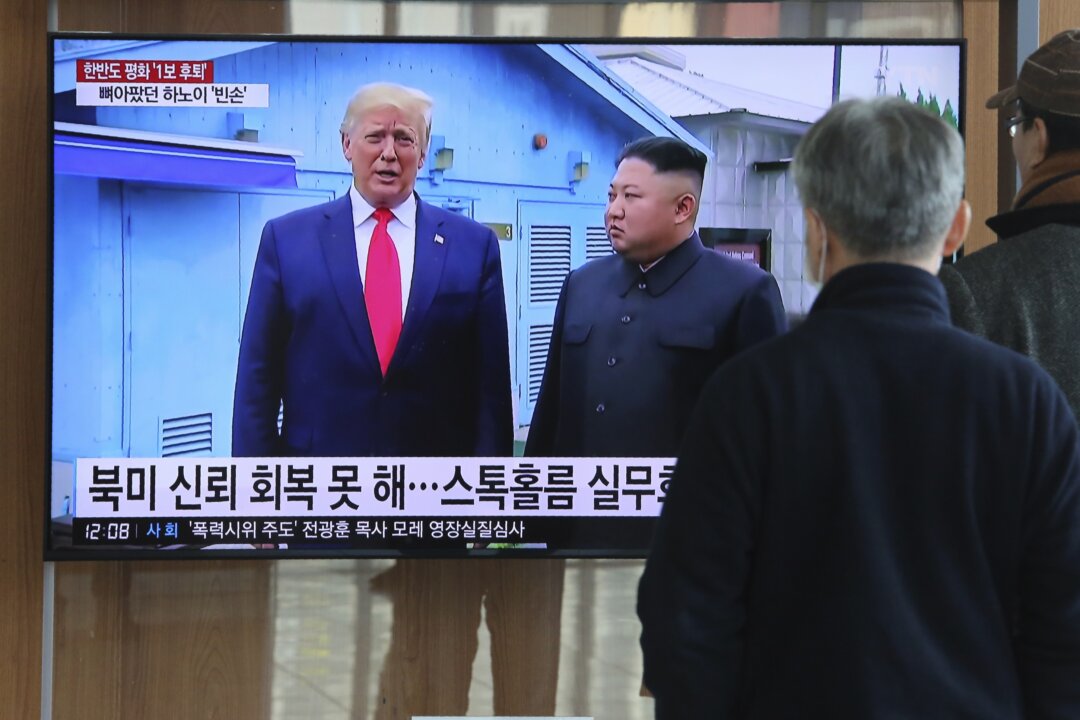
In Washington, after ordering scaled-down military exercises with Seoul, Trump on Aug. 19 said he expects a meeting with North Korean leader Kim Jong Un later this year.
While Kim’s powerful sister, Kim Yo-jong, on Aug. 18 said she was unaware of any recent contact between the two leaders, she characterized their relationship as “excellent.”
Trump’s proposal comes as Pyongyang absorbs lessons from its involvement in Russia’s war in Ukraine and bolsters its strategic military partnership with Moscow, heightening the pressures facing Seoul, Mark Cao, a U.S.-based military tech analyst and host of the Chinese-language military news YouTube channel “Mark Space,” told The Epoch Times.
“For South Korea, the military threat from the North is now greater than ever,” he said.
The South Korean president has on multiple occasions publicly asked Trump to consider another meeting with Kim, and in a recent speech, he proposed a multiparty dialogue with the North to formally discuss ending the Korean War.
Analysts say hurdles remain in the way of a renewed leaders’ summit, particularly concerning Pyongyang’s nuclear arsenal. But they said a reopened communication channel between Washington and Pyongyang aligns with Seoul’s strategic interests.
“A U.S. administration that can exert substantial influence over Pyongyang would ultimately ease the security burden on Seoul,” Su Tzu-yun, an expert on Indo-Pacific security at the Taipei-based Institute for National Defense and Security Research, told The Epoch Times.

People watch a television screen showing a news broadcast with file footage of a North Korean missile test, at a train station in Seoul on Aug. 20, 2026. Jung Yeon-je / AFP via Getty Images
Reengaging with Washington offers Kim “an opportunity” to reduce the small communist state’s “excessive economic and political reliance on China,” Lin said.
However, any improvement in U.S.–North Korea relations remains challenging due to the Trump administration’s stance on the need to denuclearize the Korean Peninsula, the expert on the Korean Peninsula noted.
“Trump might be using the prospect of restarting a meeting with Kim to pressure South Korea,” Lin said. “He might hope that Seoul ‘accelerates’ the implementation of its commitments [in trade],” he said, referring to the 2025 U.S.–South Korea Strategic Trade and Investment Deal in which South Korea pledged $350 billion in investments in the United States in exchange for lower U.S. tariffs of 15 percent.
China, North Korea’s treaty ally, hasn’t directly commented on the potential Trump–Kim summit.
While the Chinese regime may also welcome dialogue between Trump and Kim to reduce the risk of conflict between the two countries, it is wary that the rapprochement may go too far for its comfort.
“A warmer U.S.–North Korea relationship would undermine Beijing’s influence over Pyongyang, or even push it to the sidelines. That is certainly not a situation that the Chinese Communist Party would like to see,” Lin said.

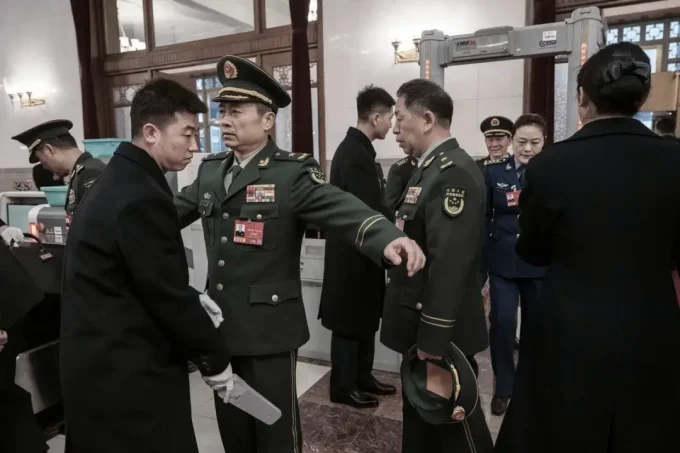
The Chinese military fires a rocket into the air as it conducts military drills on Pingtan Island, which sits across the Taiwan Strait from Taiwan, in eastern China’s Fujian province, on Dec. 30, 2025. Adek Berry/AFP via Getty Images
Echoing his sentiment, Shen said that a warming of U.S.–Pyongyang ties could have “far-reaching strategic implications” for the Chinese regime.
“Beijing fears Washington and Pyongyang bypassing itself and striking a deal,” Shen said.
If dialogue gradually materializes and contributes to the peninsula’s peace and stability, the military threats facing Seoul or Washington would be reduced, he said.
In that case, Shen said, Washington may reassess its forces stationed on the Korean Peninsula, and could reduce their size or redirect their focus to the Taiwan Strait.
It could see the primary mission of U.S. forces in South Korea shift to countering threats posed by China, the Taiwanese defense analyst said.
Luo Ya contributed to this report.