DOJ Seeks to Join X Lawsuit Over $140 Million EU Penalty
 Owen EvansUpdated 1 hour Ago3 Mins read
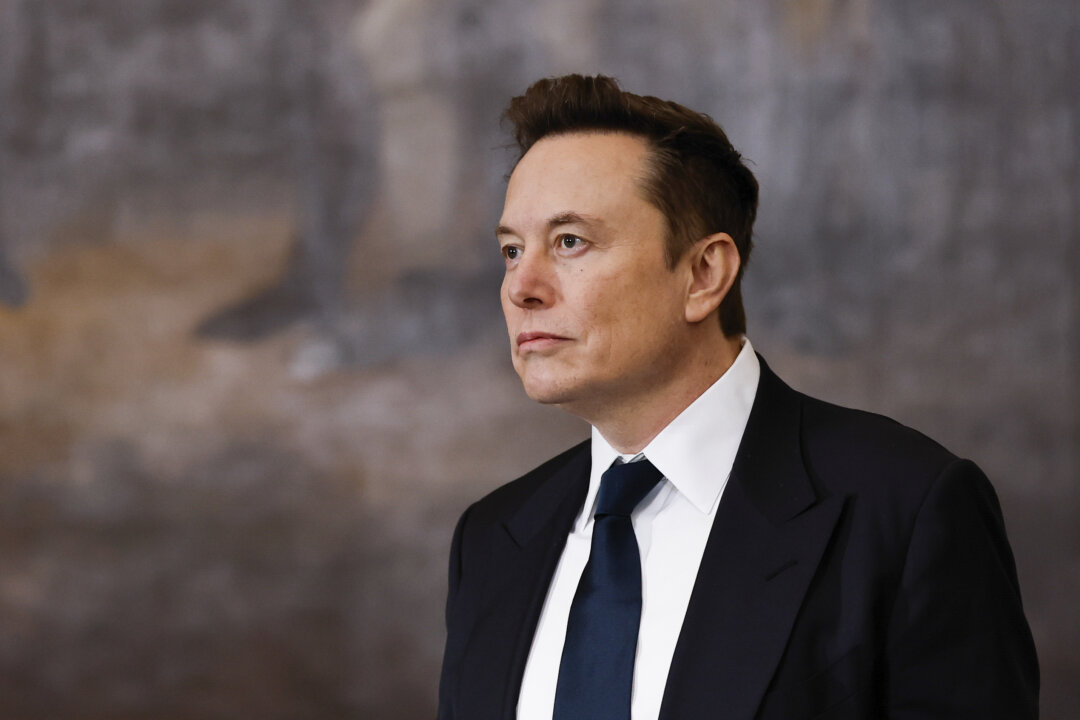
The Trump administration has asked Europe’s second-highest court to let it join Elon Musk’s lawsuit seeking to block the EU’s first Digital Services Act penalty against X.
The European Commission fined Elon Musk’s X social media company 120 million euros ($140 million) on Dec. 5 following a two-year investigation.
The commission said that X breached several transparency obligations, including the “deceptive design of its ‘blue checkmark,’” the lack of transparency in its advertising repository, and the failure to provide researchers with access to public data.
On Sept. 24, the Department of Justice (DOJ) said it had filed an application with the EU’s General Court in support of X’s effort to “annul the case.”
“The European Commission inappropriately attempted to expand its regulatory authority to reach American companies not present or operating within its jurisdiction,” Assistant Attorney General Brett Shumate of the DOJ’s civil division said.
The DOJ said that the United States “has a clear interest in ensuring that the effect of any judgment concerning the Commission’s Decision is consistent with how territorial jurisdiction is generally understood in international law, and does not otherwise prejudice U.S.-headquartered digital services companies, which contribute significantly to the U.S. economy.”
An EU spokeswoman referred The Epoch Times to European Commission spokesman Thomas Regnier, who addressed the matter with reporters on Friday in Brussels.
“We have a very solid case that we have advanced … and the Commission is, of course, absolutely ready to defend its position in court,” he said.
When asked whether this would affect relations with the United States at the moment, he said, “From our side, absolutely nothing.”
“We have a very objective, factual, solid case at our disposal because of a breach of the Digital Services Act. I mean, again, this is a solid case that we’re ready to defend, and it has nothing to do with our shared global challenges we’re having with our American counterparts,” Regnier said.
The Trump administration has hinted at a
showdown with Europe
over big tech regulation, with administration officials claiming that the EU’s laws and regulations restrict free speech.
“There is some concern that I have with respect to the approach that Europe is taking with the DSA [EU Digital Services Act] in particular,” Federal Communications Commission Chairman Brendan Carr said in
March 2025
at the Mobile World Congress in Barcelona, Spain.
The Digital Markets Act (DMA) targets very large online platforms (VLOPs) and very large online search engines (VLOSEs), including U.S. companies Alphabet, Amazon, Apple, Meta Platforms, and Microsoft.
The Digital Services Act (DSA) requires large online platforms to do more to tackle illegal and harmful content.
Under the DSA, Chinese online retailer Temu was fined 200 million euros ($232 million) in May, and AliExpress 550 million euros ($629 million) in July.
Under the DMA,
Apple
was hit with a 500 million euro ($570 million) fine, Meta with 200 million euros ($228 million), and Google with 890 million euros ($1.02 billion).
However, the EU repeatedly stated that the laws are not open for negotiation.
“Our legislation is not on the table. It is not open for negotiations, and this also includes, of course, our digital legislation,” Regnier told a daily press conference in Brussels in
June
2025.
A court in Germany on Feb. 17 ordered X to
hand
over data related to the upcoming election in Hungary to researchers for scrutiny, in a case that could have broader implications for how the EU’s new tech rules are enforced.
The lawsuit was brought by Democracy Reporting International (DRI), a Berlin-based civil society organization that receives funding from EU programs and national governments, including Germany and the Netherlands, and conducts research on online political discourse.
The Berlin Court of Appeal’s ruling on Feb. 18 was based on the DSA, which grants “vetted researchers” access to certain platform data for research.
Responding to the lawsuit, Musk said in a Feb. 18 post on X, “We are open-sourcing our algorithm. Not sure what more they want.”
Guy Birchall and Andrew Moran contributed to this report.





$680K raised for hero Belleville cop who prevented a Jewish massacre
In a post on X, former Bay of Quinte MP Ryan Williams...

Vancouver corsetier Melanie Tarkington has a world-class passion for wearable art
365 Bloor Street East, Toronto, Ontario, M4W 3L4 © 2026 National Post,...

Jewish CBC journalist faces discipline over comments about anti-Israel protest
Article contentA CBC spokesperson told National Post by email: “We respect the...

Daniel Hannan: Mark Carney, look to Britain and CANZUK, it’s the obvious choice
The U.K. lord joins Rob to explain why the true 'special relationship'...