How to Invest in Palladium
 Javier SimonUpdated 2 hours Ago3 Mins read
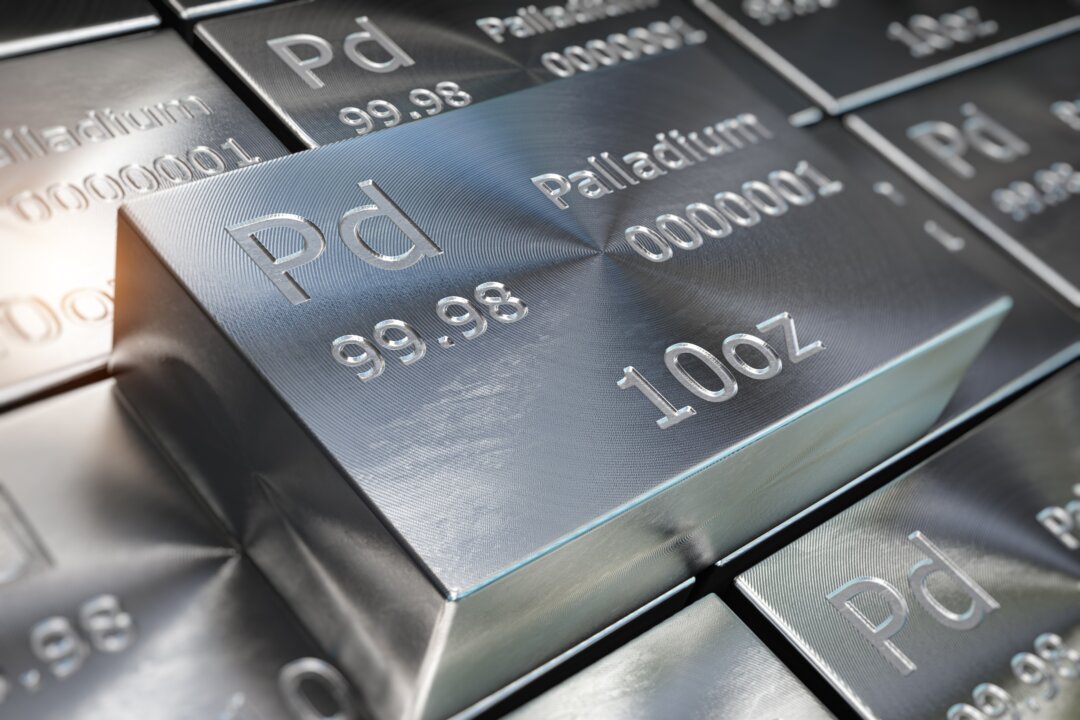
You’ve probably seen a few ads on TV or on the internet promoting investments in gold and silver. But these aren’t the only precious metals around that can help you diversify your portfolio.
Among them is palladium. And despite volatility, its price has overall been steadily climbing since the 1990s.
What Is Palladium?
Thirty times rarer than gold, palladium is a silvery-white metal that’s widely used in automotive manufacturing, electronics, dentistry, and jewelry.
But its main use is in the production of catalytic converters, which are designed to turn the toxic gases emitted by gasoline-powered automobiles into less harmful gases.
It’s also used to regulate power in common devices like smartphones and laptops.
Today, palladium trades at around $1,300 per ounce. This could make it more accessible than gold, which trades at about $4,300 per ounce.
Other than a few dips, the price of palladium steadily climbed starting in the 1990s before peaking at more than $3,150 per ounce in March 2022. It then fell significantly, reaching as low as $852 per ounce in July 2024.
If you’re interested in evaluating palladium as a potential component of your portfolio, there are many ways to access it.
ETFs
There are some exchange-traded funds (ETFs) out there that track the price of palladium and other precious metals. You can purchase shares of palladium ETFs through a brokerage account as you would any common ETF. This gives your portfolio exposure to the palladium market, while eliminating the risks and costs of holding the physical metal.
Here are some popular palladium ETFs.
-
Aberdeen Physical Palladium Shares ETF (PALL)
-
Sprott Physical Platinum & Palladium Trust (SPPP)
-
Aberdeen Physical Precious Metals Basket Shares ETF (GLTR)
Mining Company Stocks
You can also access palladium by investing in the stocks of companies involved in the mining of palladium. However, many of these companies mine for various metals. So you’ll gain exposure to other precious metals at the same time. But that also means you’d be taking on the risks and opportunities associated with those metals as well.
Nonetheless, here are some of today’s popular palladium stocks.
-
Sibanye Stillwater (SBSW)
-
Valterra Platinum Limited (OTCPK: ANGPY)
-
Impala Platinum Holdings (OTCPK: IMPUY)
Keep in mind that some of these are over-the-counter (OTC) stocks. These are stocks bought and sold through transactions that don’t happen on a traditional stock exchange like the New York Stock Exchange. They trade through broker-dealer networks called OTC markets. Make sure you carefully analyze these securities, as OTC stocks carry a higher degree of risk.
Physical Metal
If you want to literally hold on to your investment, you can always purchase palladium bars and coins through precious metals dealers.
But unlike with ETFs or mining company stocks, you’re responsible for protecting the precious metal. This means you take on any storage costs and the risk that it may be lost or stolen.
Palladium IRA
You can also open a self-directed IRA that holds physical palladium. This provides the same tax advantages as your typical IRA. But it would invest in precious metals instead of traditional assets like stocks and ETFs.
Here’s how the process usually works.
First, you find a custodian that specializes in self-directed IRAs. They would help you open an account.
You then fund your new self-directed IRA.
Afterward, you purchase palladium from a reputable precious metals dealer.
It’s essential to know that palladium going into a self-directed IRA must meet 99.95 percent purity requirements.
Next, you find an IRS-approved facility that will store your precious metals. You’re not allowed to personally store the palladium tied to your self-directed IRA. In some cases, your custodian may recommend a depository.
But keep in mind that this can be an overall pricey move. You would need to consider expenses like account management fees, storage facility fees, and insurance costs. Self-directed IRA providers also tend to have much higher account minimum investment requirements and account management fees than the larger brokerage firms that offer your typical IRAs.
Risks
No matter how you invest in palladium, you’ll be open to some significant risks and volatility.
First, palladium is primarily used in the production of catalytic converters. This means you’d be heavily tied to movements in the automotive industry. If the adoption of electric vehicles (EVs) skyrockets, the demand for palladium may suffer.
Plus, most of the supply is concentrated in Russia and South Africa. This means palladium can be especially sensitive to sanctions, mining disruptions, and overall geopolitical turmoil.
The Bottom Line
Palladium is a precious metal that can help investors diversify their portfolios. They can gain exposure through palladium ETFs, mining stocks, physical palladium, and self-directed IRAs. But palladium is highly volatile, and it’s sensitive to changes in the automotive industry, as well as geopolitical pressure. Overall, it may be most appropriate for an already diversified and advanced investor.
The Epoch Times copyright © 2026. The views and opinions expressed are those of the authors. They are meant for general informational purposes only and should not be construed or interpreted as a recommendation or solicitation. The Epoch Times does not provide investment, tax, legal, financial planning, estate planning, or any other personal finance advice. The Epoch Times holds no liability for the accuracy or timeliness of the information provided.







US Consumer Sentiment Remains Near Historically Weak Lows: UMich
U.S. consumer sentiment remained near a historically weak level this month amid...

US Treasury Bond Yields Keep Climbing: What to Know
The global bond market rout continued this week as yields rose across...

US to Invest up to $7 Billion in Argentina’s Minerals, Energy Sectors
The Export-Import (EXIM) Bank of the United States on Wednesday signed a...
Rivian Recalls Nearly 99,000 Vehicles Over Rearview Camera Image Issue
The Rivian name is shown on one of their new electric SUV...