US Consumer Sentiment Remains Near Historically Weak Lows: UMich
 Andrew MoranUpdated 3 hours Ago2 Mins read
U.S. consumer sentiment remained near a historically weak level this month amid persistent inflation worries, according to the University of Michigan.
September’s final Consumer Sentiment Index registered 48.1, the university said on Sept. 25.
This is a slight uptick from the mid-month preliminary reading of 47.8 but still marks the second-weakest point since the series began in the 1950s.
The headline index is now down 15 percent from January. Additionally, views of current and future personal finances weakened about 10 percent this month amid persistent concerns about high prices.
Buying conditions for durable goods ticked up, but largely because consumers believe purchasing now “would help consumers avoid higher prices in the future,” says Joanne Hsu, director of consumer surveys at the University of Michigan.
“The short-run outlook for business conditions plunged amid renewed worries that elevated fuel prices and re-escalating trade disputes could pass through to the economy as a whole,” Hsu said in a statement.
The inflation outlook worsened from August as year-ahead expectations rose to 4.6 percent—the highest reading since June—from 4 percent.
This is far higher than the 3.4 percent logged in February, before the war in Iran began.
After three consecutive months at 3.3 percent, the five-year forecast edged up to 3.4 percent, still below the recent peak of 3.9 percent in May.
A mix of higher price inflation and ballooning borrowing costs is expected to add to growing consternation surrounding affordability.
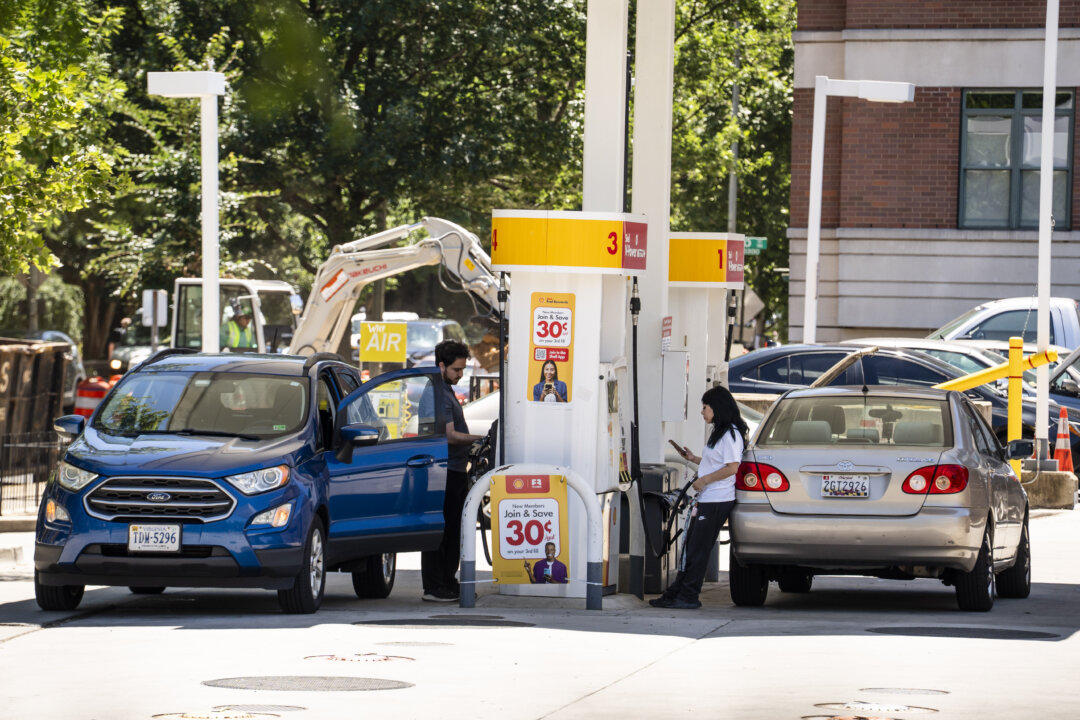
Gasoline prices have surged more than 40 percent over the past year, with the national average per gallon at $4.49 as of Sept. 25.
Intensifying fuel costs have contributed to the surge in headline inflation in recent months.
Early forecasts indicate September’s annual inflation rate is expected to reach 3.6 percent, up from 3 percent a year ago.
Stripping out the volatile energy and food categories, core inflation has been more stable.
The Cleveland Federal Reserve expects the 12-month core inflation rate to be 2.4 percent for the second straight month.
‘Households Are Sweating’
A chorus of economists, however, fear that underlying inflation pressures could be building as diesel and transportation costs rise. U.S. diesel prices are just north of $6.50 per gallon.
President Donald Trump has signaled support for a ban on diesel exports, while Energy Secretary Chris Wright said the Trump administration was not considering a flat ban on diesel shipments.
Industry leaders urged the administration not to follow through on export restrictions.
“Export bans would lead to less fuel production, tighter supplies, and rising costs for American families, farmers, and truckers,” the more than 30 U.S. business, energy, and manufacturing groups wrote in a Sept. 23 letter.
The United States is the third-largest diesel exporter, supplying approximately 20 percent of globally traded seaborne diesel.
But the surge in diesel prices could be a key contributor to second- or third-order inflation effects, which is what the Federal Reserve and other major central banks are trying to prevent with this month’s quarter-point interest rate hikes.
Despite elevated price pressures, consumers are still opening their wallets.
Retail sales—excluding gasoline and automotive dealerships—popped more than 1 percent in August.
Whether this persists heading into the fall and the busy holiday shopping season may depend on upcoming economic and employment conditions, as well as interest rates.
The Fed is expected to follow through on another quarter-point rate hike later next month, which could impact a wide range of borrowing costs.
Still, the University of Michigan’s weak consumer sentiment reading “sounds more like a recession than a boom,” says Mark Malek, CIO at Siebert Financial.
“Businesses are cooking. Households are sweating. That’s the K-shaped economy served up in a single week of data,” Malek said in a note emailed to The Epoch Times.
Tom Ozimek contributed to this report.






US Treasury Bond Yields Keep Climbing: What to Know
The global bond market rout continued this week as yields rose across...
How to Invest in Palladium
You’ve probably seen a few ads on TV or on the internet...

US to Invest up to $7 Billion in Argentina’s Minerals, Energy Sectors
The Export-Import (EXIM) Bank of the United States on Wednesday signed a...

Rivian Recalls Nearly 99,000 Vehicles Over Rearview Camera Image Issue
The Rivian name is shown on one of their new electric SUV...