

The Federal Reserve’s preferred measure of inflation cooled sharply in June, reflecting the decline in global energy prices, new government data show.
June’s annual personal consumption expenditures (PCE) price index eased to 3.7 percent, from 4.1 percent in May, according to Bureau of Economic Analysis figures published on July 30. This matched the market estimate.
From May to June, PCE inflation fell 0.1 percent, from an upwardly revised 0.5 percent.
The latest inflation numbers are consistent with other reports spotlighting a deceleration in price pressures.
Prices for goods fell 0.6 percent, driven primarily by lower costs for gasoline and other energy-related items.
Services inflation was little changed, edging up 0.1 percent due to higher healthcare and transportation costs.
But the recent jump in crude oil and gasoline prices might reaccelerate headline inflation in August or September.
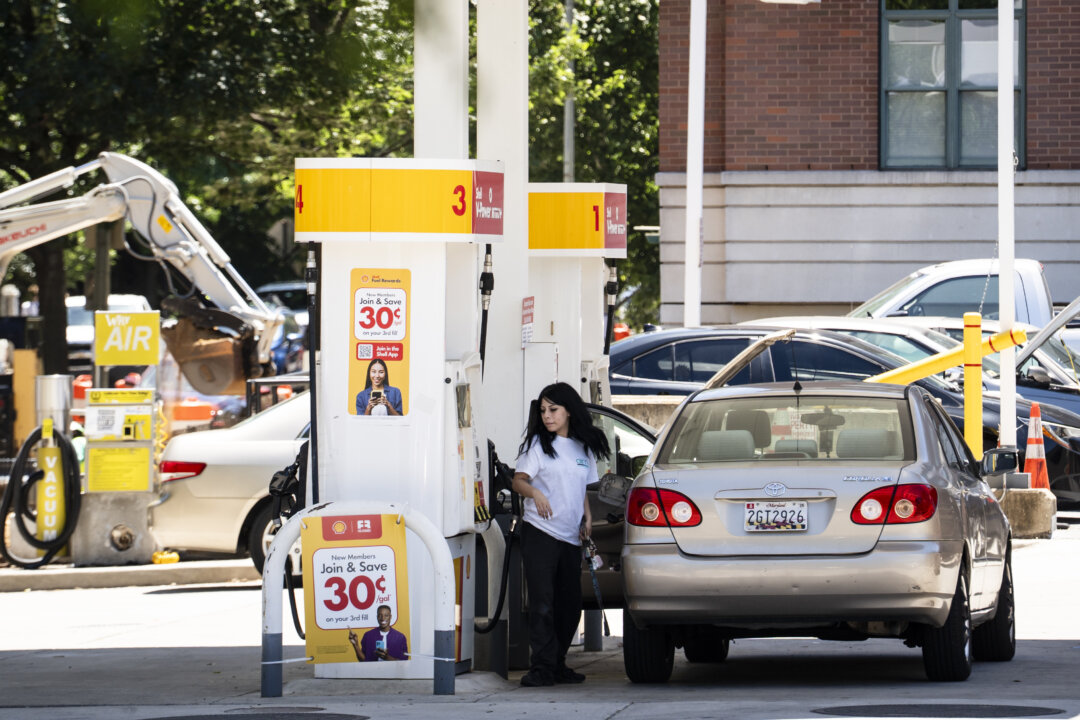
Energy markets have surged in response to the resumption of hostilities between the United States and Iran, sending gasoline prices above $4 per gallon.
Underlying inflation, which the Federal Reserve focuses on, has been tamer.
Excluding energy and food, the 12-month core PCE inflation rate eased to 3.3 percent, from 3.4 percent—in line with the consensus forecast.
On a monthly basis, core PCE ticked up 0.1 percent, lower than economists’ expectations.
This proves the Federal Reserve made a prudent decision to leave interest rates unchanged on July 29, says Jamie Cox, managing partner for Harris Financial Group.
“These data confirm what we already knew—but for the energy shock, inflation would be heading lower. The Fed made the right call yesterday to stand pat on rates,” Cox told The Epoch Times in an emailed note.
For the July numbers, scheduled for release on Aug. 26, PCE inflation is expected to be slightly higher, which could fuel forecasts of tighter monetary policy.
The annual PCE rate could return to 3.7 percent and jump 0.2 percent monthly, according to the Cleveland Fed’s Inflation Nowcasting model.
Investors largely expect the central bank to raise interest rates at the September policy meeting. While Fed Chairman Kevin Warsh refrained from committing to a position, he insisted that the Fed is prepared to act if necessary.
“Let me reiterate: There is no soft inflation target,” Warsh told reporters at the post-meeting news conference. “There is no soft implicit target, not on this committee’s watch. There’s only a target, and it’s 2 percent.”
Three members dissented—Cleveland Fed President Beth Hammack, Dallas Fed President Lorie Logan, and Minneapolis Fed President Neel Kashkari—preferring to follow through on a quarter-point rate hike to combat inflation.
It could be a balancing act, especially after the weaker-than-expected second-quarter GDP growth rate, says Chris Zaccarelli, chief investment officer at Northlight Asset Management.
The economy expanded 1.5 percent in the April–June period, down from 2.1 percent in the first quarter, and below the consensus forecast of 2.1 percent.
“The weaker-than-expected GDP numbers this morning could be cause for concern that the economy is slowing too quickly,” Zaccarelli said in a note emailed to The Epoch Times.
“On the other hand, the lower PCE readings should give the Fed some more room to be patient and not raise interest rates prematurely.”

Federal Reserve Chairman Kevin Warsh arrives to speak at a press conference in Washington on July 29, 2026. Madalina Kilroy/The Epoch Times
Robust consumer spending and business investment powered the economy in the last quarter, though not enough to drive stronger growth.
Consumer Checkup
Easing price pressures were not enough to encourage consumers to increase their spending in June.
Personal spending rose 0.3 percent—in line with expectations—from an upwardly adjusted 0.9 percent gain in May. Personal income jumped by a smaller-than-expected rate of 0.2 percent, from 0.7 percent in the previous month.
Consumers have kept opening their wallets this year despite economic uncertainty.
Expectations about business conditions and the labor market weighed on consumer confidence this month, The Conference Board reported on July 28.
The July Consumer Confidence Index slipped to 90.8, from an upwardly adjusted 92.2.
“Consumer confidence moderated slightly in July, continuing a general downward sloping trajectory since late 2021,” Dana Peterson, chief economist at The Conference Board, said in a statement.
“The Present Situation Index was less positive for a third consecutive month while the Expectations Index remained in negative territory.”
America’s employment situation remains stable.
Initial jobless claims—the number of Americans filing applications for unemployment benefits—increased by 9,000 to a lower-than-expected 197,000 for the week ending July 25. Unemployment claims had reached their lowest level in 57 years in the previous week.