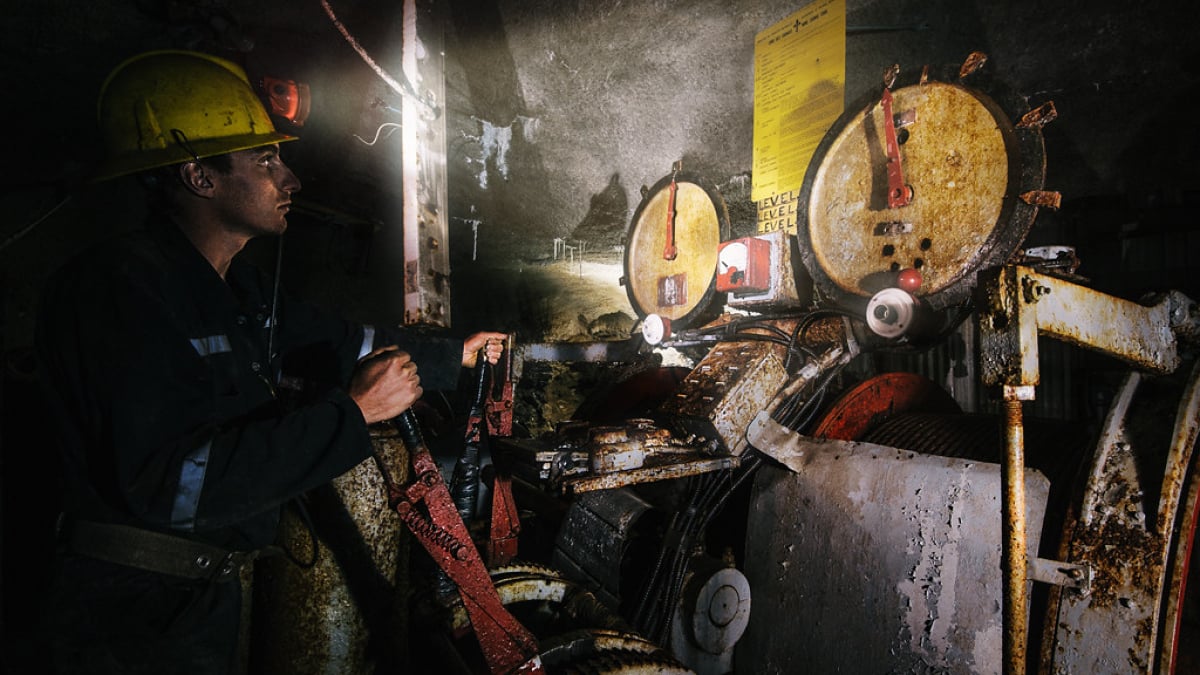
The Suffield mine in Quebec’s Côte-Nord region mined copper and silver from 1865 to 1914 and from 1951 to 1955. The Uniquartz mine at Bas Saint Laurent was active from 1994 to 2000. What these two old mines have in common is that they are legally abandoned and cleaning them up is now the responsibility of the Quebec government.
These sites pre-date current provincial regulations designed to avoid adding to the list of 336 abandoned mines in Quebec. The provincial government is currently on the hook for about $1.2 billion (as of March last year) to clean up these abandoned mine sites because previous laws didn’t require mining companies to post guarantees. (A mine is considered abandoned if there’s no legal entity responsible for it.)
But a recent report from Quebec’s auditor general suggests the province’s Ministry of National Resources and Forests (MNRF) is still far from adequately enforcing the current mine restoration regulations.
The report charges that the MNRF, the government entity responsible for overseeing mining, “conducts very little oversight of mining exploration activities, including to ensure that licensees comply with the obligations set forth in the Mining Act.” That also includes post-mining clean up.
Every mine company operating in Quebec is required to file a rehabilitation and restoration plan for each mine site before work starts, but, according to the report, the submissions are incomplete, the required periodical updates don’t happen on time and the financial guarantees also aren’t updated to keep up with costs and inflation.
Robust rules on paper
A rehabilitation and restoration plan details how a mine site will be cleaned up and maintained after mining is finished. The financial guarantees are supposed to cover all the costs of returning the entire mine site to “satisfactory condition.” The MNRF decides what is satisfactory.
“Quebec has probably one of the most robust, at least on paper, regimes in the country,” says Elizabeth Steyn, a mining law specialist at the University of Calgary. ”Quebec wants you to put aside a required financial guarantee for the estimated closure obligation right at the beginning.”
By law, those plans are supposed to be updated by the mining companies every five years at a minimum. That’s to ensure financial guarantees are current with a mine’s on-the-ground reality. Yet, as noted in the report, updates are actually submitted every seven and a half years on average. There are four mines where there will be nine years between revisions.
That’s a problem because the cost of rehabilitating a mine site can change significantly due to mining activity, environmental damage, climate change and inflation.
Quebec has been here before. In a 2009 auditor general report, similar criticisms were voiced and prompted a change to the provincial mining laws in 2013, which were meant to protect the public purse if a mining company went bankrupt.
“But this recent report came with some strong observations about the fact that, yeah, even if you have the money, you have to update those restoration plans, you have to actually do the work and that was not done,” said Rodrigue Turgeon of advocacy organization MiningWatch Canada.
‘Ridiculously low’
The mining companies are responsible for coming up with the amount of the guarantee, a task typically designated to a third party hired by them, said Steyn.
“The company who’s lodging this original plan is going to lodge it according to their own internal costs and as conservatively as possible,” she said.
Turgeon also said the amounts calculated by the mining companies are neither realistic, nor would they be enough to fund an eventual site clean-up. “They appear to us to be ridiculously low,” he said. “It’s only a couple million dollars for a 20-year mine that’s going to extract millions of tonnes of waste.”
Further, the restoration plan isn’t part of the public comment period, says Turgeon, which means it’s not included in a mine’s impact assessment. It’s kept separate and there’s no opportunity to question rehabilitation plans and estimated costs.

The mining companies have their own complaints about the process. As the guarantee must be paid in full before the start of mining activities, that money is sitting unused, said Steyn.
“One critique the mining companies have regarding the Quebec regime is that, because the entire guarantee has to be paid up front and much of the disturbance is only made later on, that money is sterile,” she said. “But my response to that is, so be it. You know, you guys are going to be making your money down the line, the community does need, and the state does need to be indemnified against what you’re going to be doing.”
Mines can take decades to build and operate for decades more, so estimating costs far in advance is difficult. Quebec also doesn’t make allowance for progressive rehabilitation, which could potentially decrease the financial guarantee. “From an environmental perspective, that encourages the mine to actually start rehabilitating at an earlier stage,” Steyn said.
In a response, a spokesperson for the MNRF said it is, in part, “already taking steps to improve its processes, particularly with regard to the restoration and reclamation of mining sites … An action plan is currently being developed.”
Turgeon said the rehabilitation of old mine sites isn’t getting the attention it deserves, as Quebec — like much of Canada — focuses on new mines to capitalize on the critical minerals boom.
“It’s very frightening to see the imbalance between the importance we give to the restoration versus to the building of new mines,” Turgeon said.
September 25th 2026