Article content
‘National identity now matters as much as economic well-being to a large share of the country’

THIS CONTENT IS RESERVED FOR SUBSCRIBERS
Enjoy the latest local, national and international news.
- Exclusive articles by Conrad Black, Barbara Kay and others. Plus, special edition NP Platformed and First Reading newsletters and virtual events.
- Unlimited online access to National Post.
- National Post ePaper, an electronic replica of the print edition to view on any device, share and comment on.
- Daily puzzles including the New York Times Crossword.
- Support local journalism.
SUBSCRIBE FOR MORE ARTICLES
Enjoy the latest local, national and international news.
- Exclusive articles by Conrad Black, Barbara Kay and others. Plus, special edition NP Platformed and First Reading newsletters and virtual events.
- Unlimited online access to National Post.
- National Post ePaper, an electronic replica of the print edition to view on any device, share and comment on.
- Daily puzzles including the New York Times Crossword.
- Support local journalism.
REGISTER / SIGN IN TO UNLOCK MORE ARTICLES
Create an account or sign in to continue with your reading experience.
- Access articles from across Canada with one account.
- Share your thoughts and join the conversation in the comments.
- Enjoy additional articles per month.
- Get email updates from your favourite authors.
THIS ARTICLE IS FREE TO READ REGISTER TO UNLOCK.
Create an account or sign in to continue with your reading experience.
- Access articles from across Canada with one account
- Share your thoughts and join the conversation in the comments
- Enjoy additional articles per month
- Get email updates from your favourite authors
Sign In or Create an Account
or
Article content
Article content
Article content
Reading John Ivison’s Sept. 1 column on the trade talks and Michael Higgins’ column on the same immediately afterwards was edifying. They both grasped the immediate economic cost of the ongoing trade war. But one largely missed the deeper national anger over the attacks on our sovereignty. Together they illuminated why the collapse of Canada-U.S. negotiations is not just another trade spat.
Article content
Article content
Like Ivison, Canadians are not stupid. They get that it is about the economy: jobs, GDP, supply chains, the risk of auto tariffs climbing to 50 per cent if Canada accepts terms that violate the letter and spirit of the 2018 CUSMA, terms Ottawa has long called illegal under the agreement. Accepting them would mean endorsing the principle that a signed free-trade deal is written in pencil, erasable whenever Washington feels like it. That is the economic and legal heart of the resistance.
Article content
By signing up, you consent to receive the above newsletter from Postmedia Network Inc.
Article content
But national identity now matters as much as economic well-being to a large share of the country. Call it hubris. Call it misguided. It is real. The “51st state” threats, the “governor” jibes, the casual insults directed at Canadians as being “nasty,” are affecting us. Maybe none of it should matter, and reason should win out over passion, but when a U.S. president can order the renaming of Lake Ontario, the body of water shared with Canada’s most populous province, to “Lake America,” the message is unmistakable: Washington defines the map, the terms, and the identity of Ontarians.
Article content
Prime Minister Mark Carney and Ontario Premier Doug Ford may be playing partisan politics. But Canadians largely do not mind. The alternative, appearing as a country whose major industries can be slowly dismantled, whose cultural and language protections can be bargained down, whose sovereignty can be subordinated, cuts deeper than a temporary GDP hit. A GDP decline registers on a spreadsheet. A sense of self does not.
Article content
Article content
This is about more than a trade war. It is about who gets to define Canada’s place and its own self-identification. Canadians are being undeservedly maligned, mistreated, and they know it. Higgins focused on the economic arithmetic and found the walk-away costly. He is not wrong on the numbers. He simply does not reach the heart of the dispute: for many Canadians, a diminished sense of independence, the freedom to be true to ourselves, is the more meaningful loss.
Article content
Article content
Tony D’Andrea, Toronto
Article content
Article content
‘Who would ever want to serve under Pete Hegseth?’
Article content
Article content
When I was a recruit at the Royal Military College 50 years ago, the College Sergeant Major was a man who reportedly weighed 380 pounds at the time. No matter. The Sergeant Major was a 30-year infantry veteran whose distinguished career had included wartime service in Korea. He was, literally, a larger-than-life presence who was respected and well-liked by the cadets, someone who was a father figure to many of us, myself included.
Article content
Which brings us to U.S. Secretary of War Pete Hegseth’s recent post appearing to ridicule an instructor at the Army Cadet Training Centre in Vernon, B.C. I suppose we should ask ourselves, what else could we expect from someone who works for a president who has a yellow stripe running down his back? Perhaps Secretary Hegseth should ask his boss where he was when Americans of his generation were fighting and dying in Vietnam 60 years ago.
Article content
Maybe in Hegseth’s next post, he might decide to take shots at Gen. Sir Arthur Currie, who, commanding the Canadian Corps during the final two years of the First World War, led the Canadians to some of their greatest victories. Currie was a large man who would have hardly fit the image of the lean-and-mean warrior that Hegseth imagines himself to be. Nevertheless, Currie proved himself to be one of the most effective battlefield commanders of the Great War, so much so that some historians have speculated that had the war continued for another year, British prime minister David Lloyd George would have given him command of all forces of the British Empire.
Article content
Article content
I find it hard to see how any military professional, regardless of their service affiliation or rank, would ever want to serve under Pete Hegseth. Someone needs to tell Trump, Hegseth, and all the rest of their contemptible and pathetic gang to go jump in Lake ONTARIO.
Article content
Mike Kennedy, Toronto
Article content
Article content
Canada’s auto industry is key to defence
Article content
Article content
Michael Higgins writes, “Tariffs on trucks isn’t a sovereignty issue, it’s a trade one and best dealt with at the negotiating table.” But he is wrong.
Article content
In the Second World War, Canada’s automotive sector was a decisive strategic asset that was converted to serve the Allied cause. (As we all know, the Americans were very late to join the war effort.) By the end of the war, Canada had produced over 800,000 military transport vehicles, including troop carriers, ammunition trucks, artillery tractors, wireless/radio trucks, ambulances, workshops, water tankers, fuel carriers, maintenance vehicles, recovery vehicles, gun platforms, mobile laundries, and engineering vehicles. Approximately 650,000 such military vehicles were supplied to Canada’s allies, while Canada itself took up the rest.
Article content
Article content
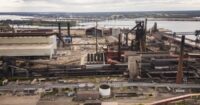
Without maintaining this capability domestically, Canada will be unable to act to defend itself in a war, at least as far as producing the necessary equipment as needed. If the United States is successful at its stated goal of terminating Canada’s domestic truck industry and moving production to the United States, Canada will be left a sitting duck.
Article content
Graham Haig, Toronto
Article content
Article content
‘Maybe we can rename Lake Ontario (at least for now) to Lake Hissyfit’
Article content
Article content
Renaming Lake Ontario, whose proper name was coined by Indigenous people who preceded us by centuries, is as hideous and tone-deaf an act as all the blather about the “51st state” or the suggestion that Canada drop one of our official languages from our packaging for American products being sold here. Maybe we can rename Lake Ontario (at least for now) Lake Hissyfit. Or at the very least, riffing off Leonard Cohen, let’s hope that with the American midterm elections, “Democracy is coming to the U.S.A.”
Article content
Ron Charach, Toronto
Article content
Article content
Mayors, town councillors, universities and a raft of do-gooders have taken Sir John A. Macdonald’s name off numerous schools and removed, toppled or destroyed several statues of our first prime minister. Edward Cornwallis’s name and statue have been expunged from Halifax. Ryerson University is now Toronto Metropolitan University, and Ryerson Park is now Sweetgrass Park in Burlington, Ont. Toronto’s Yonge-Dundas Square is now Sankofa Square. Statues of both Queen Victoria and Queen Elizabeth II have been toppled and Queen Victoria was beheaded. Vancouver’s Trutch Street has been renamed Musqueamview Street (šxʷməθkʷəy̓əmasəm). The Queen Charlotte Islands are now Haida Gwaii. And the list of erased history goes on.
Article content
But when America chooses to call Lake Ontario — Lake America, them’s fightin’ words.
Article content
Canada needs to get a grip.
Article content
John P.A. Budreski, Whistler, B.C.
Article content
Article content
Old Age Security has been earned
Article content
Article content
I am a senior (78) collecting Old Age Security (OAS), which is not subject to clawback.
Article content
My taxable income is around $100k. I emphasize taxable, because income taxes apply across the board, regardless of age. And I am probably paying more tax currently than many of the young people who would somehow see this as unfair.
Article content
Here’s another factor: I’m an immigrant of 50+ years of standing, which means I’ve paid taxes for 50+ years. And now I’m getting some back. Shame on me.
Article content
What I don’t get is this: I’m a front-end baby boomer, born in 1947. So, for my entire working life I’ve known that I would be one of a great many seniors looking for what comes with old age. This includes greater demand on such things as health care, retirement homes and, wait for it … OAS!
Article content
Why is this a surprise to so many commentators?
Article content
Jim Blum, Calgary
Article content
Article content
Article content
Where will Carney go next?
Article content
Article content
It was a simple question asked of Prime Minister Mark Carney, as to whether he would seek re-election, and his avoiding of a direct answer offered some insight.
Article content
When Carney moved from his role as head of the Bank of Canada to being head of the Bank of England, he moved form being a big fish in a small pond to arguably a big fish in a big pond. The circles he moved in were certainly much bigger and carried more prestige than when he was head of the BoC. Then he had a turn at the UN as Special Envoy on Climate Action and Finance, so a different role but still travelling in the same circles, and let’s not forget his private endeavours with the Brookfield Corporation. When he became PM, he barely unpacked his bags, opting to spend a lot of time with his friends in Europe, and elsewhere, under the umbrella of developing new trading relationships.
Article content
Article content
Carney’s vision for Canada when he won is certainly a vision that will far exceed one term, and nationalism aside, the stage that Carney is used to playing on is certainly not the same. Carney’s history is one of upward mobility and as such spending eight or 12 years in Ottawa dealing often with mundane affairs might seem stifling to a man like him.
Article content
In late 2029 an election is due to be called in Canada. In the same year, but a little sooner then the federal election, the position of head of the International Monetary Fund will come open. To recap: Carney has been head of two international banks, a UN representative, a chair of the board overseeing strategic financial decisions for a private company, and prime minister of Canada. If you are Carney, what is your next logical move in career advancement?
Article content
Jeff Spooner, Kinburn, Ont.
Article content
Article content
National Post and Financial Post welcome letters to the editor (250 words or fewer). Please include your name, address and daytime phone number. Email letters@nationalpost.com. Letters may be edited for length or clarity.
Article content
Article content
Article content
Article content