The government of Ontario has warned municipalities that if they don’t purchase Canadian goods and services, they could be cut off from provincial funding. But municipalities say the rules are making procurement harder — even for those that are prioritizing Canadian purchases.
On Wednesday, Minister of Municipal Affairs and Housing Rob Flack sent a letter to 444 municipalities, writing that in the face of US tariffs, buying from Canadian suppliers, and specifically those in Ontario, “is not optional. It is an absolute must.”
Flack notes that the Municipal Buy Ontario Procurement Directive “requires municipalities, local boards and municipal services corporations to prioritize Ontario and Canadian products.” He directed municipalities to review their “supply chains, procurement practices and upcoming purchases.”
The directive was added onto the Buy Ontario Act, which passed in 2025, and requires the same from public sector entities. In 2026, it was expanded to municipalities.
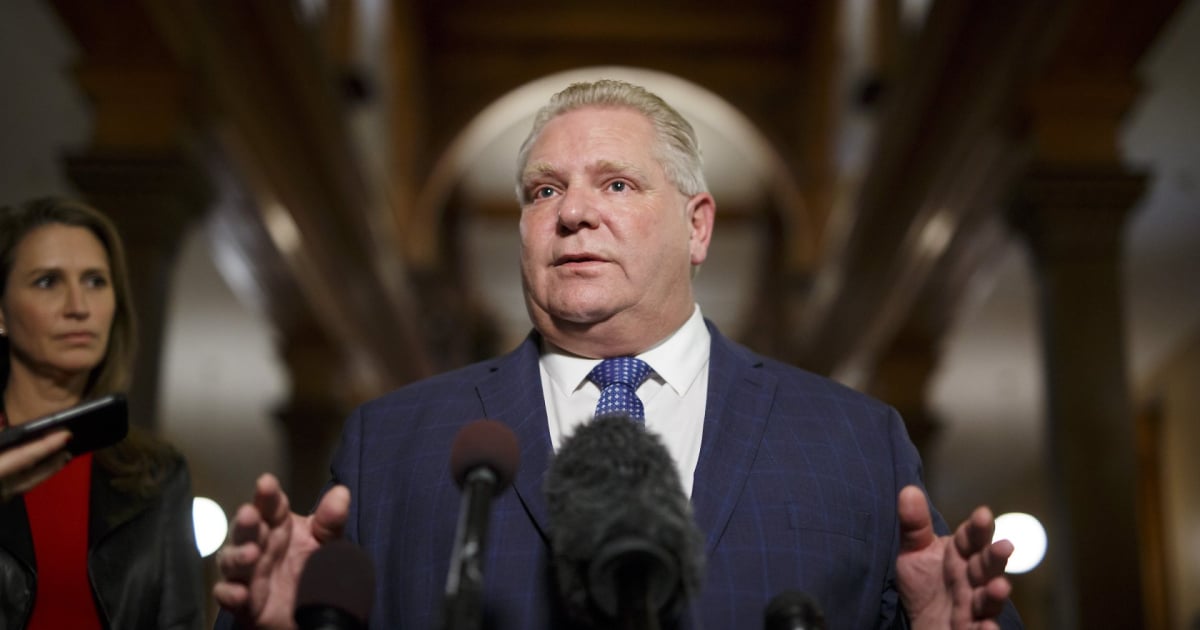
At an unrelated news conference on the same day, Premier Doug Ford said that the province has a rule: “buy Ontario first, Canada second.” He said there was an instance of US bricks being imported to build a school in Ontario.
On social media platform X, Ford elaborated: “For governments across Ontario, it’s not an option. It’s the law.”
In Flack’s letter, he said the government would “reconsider provincial funding made available to municipalities” that fail to adhere to the Buy Ontario requirements.
In a statement to Canada’s National Observer, Riley Brockington, president of the Association of Municipalities of Ontario (AMO), said even before the tariff war, municipalities in the province were already prioritizing local goods and services.
According to AMO, more than 98 per cent of goods and services purchased by municipalities, outside of those used in construction, were Canadian even prior to the passage of the Buy Ontario Act. The association said it has not heard of any widespread issues of towns and cities failing to comply with the legislation.
“Municipalities now have several months of experience with the new requirements, and we are hearing from municipalities and industry that some of the rules are adding time, cost and complexity to procurement,” said Brockington.
“Working together to make the system clear, practical and workable will be critical to achieving our shared goal of strengthening Ontario’s economy.”
AMO said there have been webinars with the province about the implementation of the Buy Ontario Act, but that municipalities are still uncertain about how to confirm that a full supply chain is Canadian. They are also wondering how to balance the requirements with financial stresses and construction timelines.
September 17th 2026