The Parti Québécois (PQ) unveiled a fiscal framework Tuesday that calls for a return to a balanced budget in 2028–29. It was the last major political party to present its economic roadmap.
If elected on Oct. 5, the sovereigntist party would make cutting spending related to bureaucracy its priority in bringing the province’s finances back into the black — one year earlier than required under Quebec’s Balanced Budget Act.
Without specifying how many positions could be eliminated, the PQ says it could save as much as $6.6 billion by reducing the government’s payroll by 2.5 per cent.
According to Nicolas Marceau, the party’s candidate in Marie-Victorin — an electoral district on the south shore of Montreal — and its spokesperson on economic issues, the savings could be even greater. “When it comes to reducing bureaucracy, we’ve included amounts that seem very conservative to us. We think we can go further,” he said during the presentation of the framework.
To illustrate the potential savings, Marceau cited the example of municipal reporting requirements. “In Quebec’s municipalities, there are 4,000 employees whose sole job would be to complete accountability forms for the Quebec government. According to municipal estimates, that represents $325 million a year,” he explained. “These aren’t direct public services to the population. That’s what we mean when we talk about tackling bureaucracy.”
The PQ is also counting on nearly $4.4 billion in additional federal transfers by 2031, although those funds remain uncertain since they will have to be the subject of new agreements with Ottawa.
$6.5 billion in new spending
The Parti Québécois estimates that the government will incur $6.5 billion in new spending over the coming years. It is setting aside $5 billion to cover unforeseen circumstances, including those arising from the tariff war with the United States.
A 20 per cent tax cut will be offered to small and medium-sized businesses, financed by an equivalent reduction in subsidies to foreign multinationals. The measure would increase Quebec’s GDP growth by 0.25 per cent a year and bring in $700 million for the public treasury, according to the PQ’s economic team. The debt-to-GDP ratio would thus fall from 37.8 per cent to 35.5 per cent by 2033.
To provide a gas rebate to Quebecers earning less than $40,000 a year, the PQ plans to cut funding for certain programs under the Electrification and Climate Change Fund (FECC). A total of $450 million from the FECC would be reallocated each year, for a total of $1.8 billion.
The PQ provided no further details on which programs would be affected. The party explained that most of the money currently used to fund the Roulez vert program, which encourages the purchase of electric vehicles, would instead be used to pay for the gas-tax rebate.
“There has been a huge amount of money added to the FECC by the Coalition Avenir Québec government in recent years. After our spending, there will be nearly $1 billion left. We’ll be able to do something with that,” said Nicolas Marceau, adding that the “Mobility Pass” promised by his party will be funded through the FECC.
Attacks on the CAQ, criticism from QS
Among the measures already unveiled during the election campaign is a gradual reduction in the Economic Development Fund, with a $635-million cut in 2026–27 that will grow to $2.54 billion by 2030–31. The measure is a “gradual phase-out” that will not be completed within a single term. “This reduction amounts to $2.5 billion in the fiscal framework we have just presented. It’s important to understand that business subsidies under Ms. Fréchette and Mr. Legault have increased from $4.8 billion to $9.5 billion,” Marceau said.
He also took the opportunity to criticize the CAQ government’s record, describing it as an “open-ended stream of subsidies to foreign multinationals.”
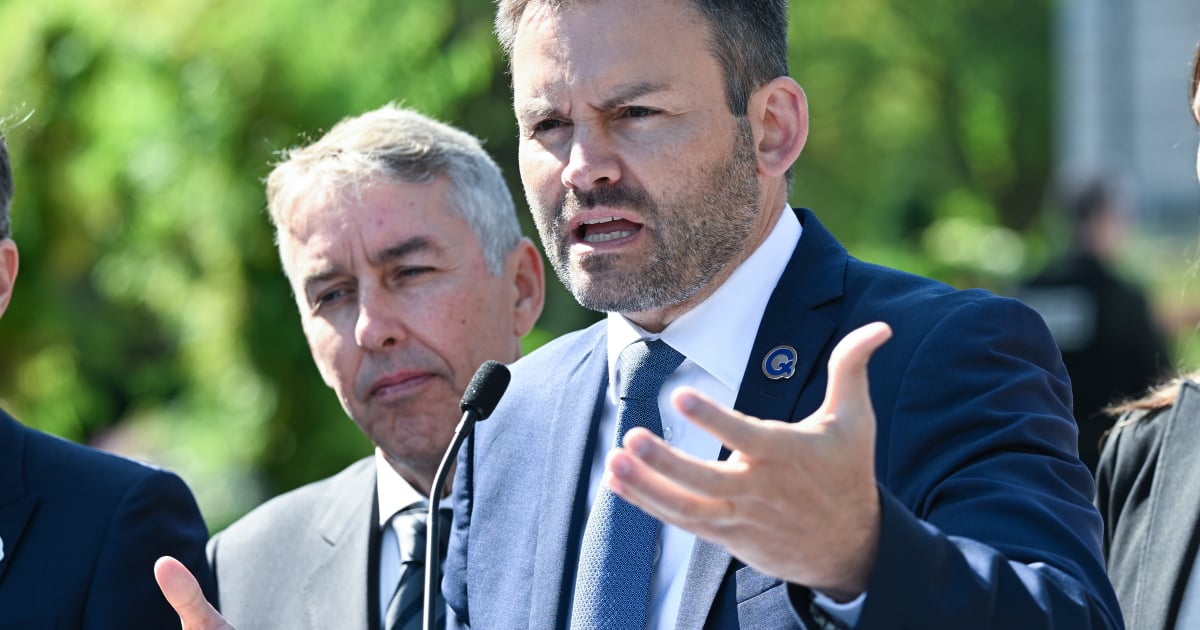
As the parties prepared for the first major televised debate, only Québec solidaire responded, through Gabriel Laurence-Brook, the party’s candidate in Jacques-Cartier. He described the fiscal framework as “very similar to those of the CAQ and the Liberals,” and said it would subject Quebecers to “austerity worse than that of Philippe Couillard.”
“He is eating into the reserves to fund his promises while we are facing US tariff attacks,” the Québec solidaire candidate said. “Like the federalist parties, the Parti Québécois is relying on unconfirmed federal transfers to fund its promises, all the way through 2030–31.”