Palace-Aligned PAM Wins Morocco’s Election as Ruling Party Slumps and Islamists Rebound
 Etienne FauchaireUpdated 13 hours Ago4 Mins read
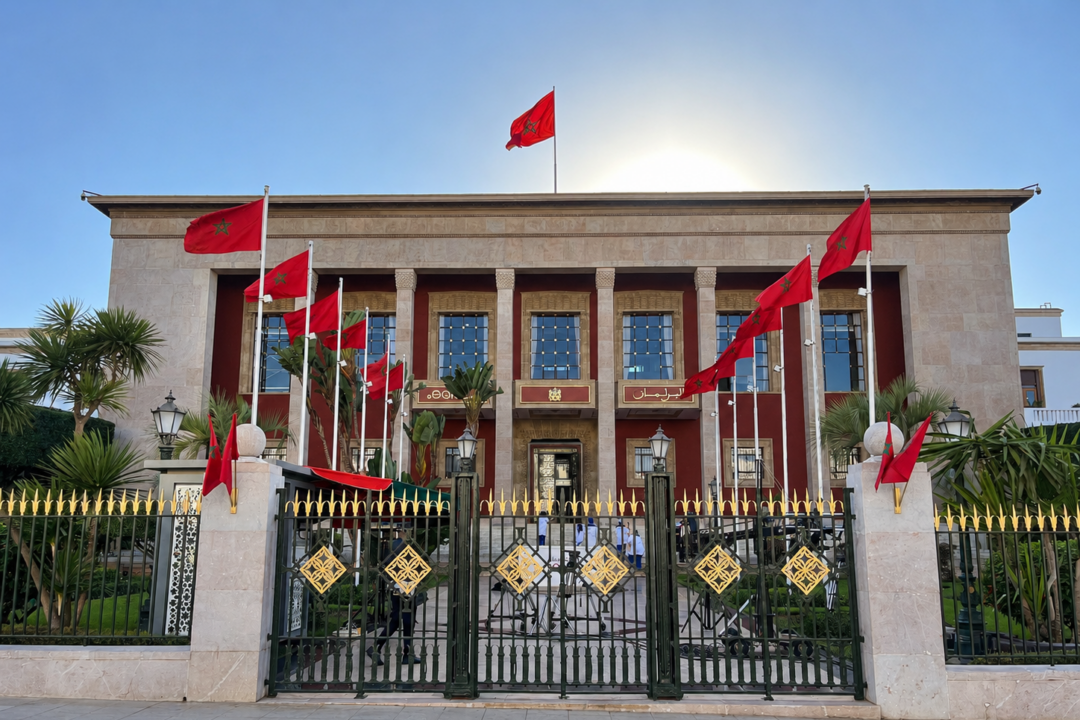
RABAT, Morocco—Morocco’s Authenticity and Modernity Party (PAM) came first in the country’s Sept. 23 legislative election, winning 97 of the 395 seats in the House of Representatives, according to provisional results announced early on Sept. 24 by Interior Minister Abdelouafi Laftit.
The National Rally of Independents (RNI), which has led the government since 2021, fell to second place with 66 seats, only one seat ahead of the nationalist Istiqlal Party at 65.
The Islamist Justice and Development Party (PJD) won 54 seats after falling to just 13 in the 2021 election. The socialist USFP took 26 seats, and the left-wing PPS 19.
In 2021, the RNI had won the election, gaining 102 seats, followed by PAM (87) and Istiqlal (81).
These three parties proceeded to form a governing coalition. Together, they would still hold a majority with 228 seats, although their combined total has now diminished by 42 seats.
Turnout was just above 38 percent, the lowest since 2007 and well below the slightly more than 50 percent recorded in 2021.
Nearly 6 million of Morocco’s 15.8 million registered voters cast a ballot this year.

Polling station inside Lycée Hassan II, Hassan district, Rabat, Morocco, on Sept. 23, 2026. Etienne Fauchaire / The Epoch Times
About 27 million Moroccans are of voting age.
The number of registered voters has also fallen since 2021, even as Morocco’s population has continued to grow.
Under Morocco’s 2011 constitution, King Mohammed VI appoints the head of government from the party that finishes first. He also appoints other ministers based on proposals from the head of government.
The monarchy keeps control over defense, foreign affairs, and the interior, giving the king broad powers over the country’s overall direction.
With 198 seats needed for a majority, PAM will have to find coalition partners to form a government. This could prove difficult as the party ruled out partnering with the RNI, both trading blame over parts of the government’s economic record, including its inability to curb rising food prices.
Winners and Losers
PAM was founded in 2008 by Fouad Ali El Himma, a childhood friend and adviser to King Mohammed VI, and emerged, in part, as a counterweight to the PJD pleading for social modernization and greater secularization.

PJD leader Abdelilah Benkirane arrives to vote in Diour Jamaâ neighborhood in Rabat, Morocco, on Sept. 23, 2026. Etienne Fauchaire / The Epoch Times
During the campaign, PAM proposed a $37 billion program that included plans to create 1 million jobs, remove income tax on salaries below 15,000 dirhams ($1,575), and provide 100,000 housing options for young people.
Fouzi Lekjaa, president of Morocco’s football federation and a two-time holder of the government’s budget portfolio, strengthened PAM’s position in the weeks leading up to the vote.
He is widely credited with the national team’s rise to international prominence, including its historic run to the semi-finals of the 2022 World Cup, and with overseeing investment in infrastructure for the 2030 World Cup.
He is now seen as a leading contender for prime minister.
PAM leader Fatima Ezzahra El Mansouri is also considered a potential candidate to head the government. If appointed, she would become the second woman to serve as prime minister in an Arab country, following Tunisia’s Najla Bouden.
The RNI, a liberal and pro-business party, suffered the biggest losses in the election.
Outgoing Prime Minister Aziz Akhannouch, a billionaire businessman, stepped down as party leader in February and did not seek another term. His government had faced criticism over the rising cost of living, unemployment, and allegations of conflicts of interest, which it denied.
At the party’s headquarters in Rabat on election night, many of the seats set aside for supporters remained empty.

Election night at RNI headquarters in Rabat, Morocco, on Sept. 23, 2026. Etienne Fauchaire / The Epoch Times
Istiqlal, Morocco’s oldest political party, grew out of the country’s independence movement and is led by Water Minister Nizar Baraka. The party lost 16 seats.
The PJD, which led the government for a decade before suffering a major defeat in 2021, has been rebuilding under former Prime Minister Abdelilah Benkirane. He returned to lead the party in October 2021.
Jobs, Prices, and Frustrated Youth
The campaign focused heavily on everyday concerns, such as jobs, wages, housing, schools, and hospitals.
While Morocco’s economy is growing—attracting foreign investment and spending about $20 billion on stadiums, railways, and other infrastructure ahead of the 2030 World Cup, which it will cohost with Spain and Portugal—it has not yet translated into enough jobs, particularly for young Moroccans.
Unemployment among 15- to 24-year-olds rose to 37.2 percent in 2025, according to the High Commission for Planning, Morocco’s national statistics agency. Some 2.9 million Moroccans between the ages of 15 and 29 are neither working nor studying.
Only about 3 percent of registered voters are between 18 and 24.
A year ago, Morocco was shaken by youth-led protests organized online under the banner GenZ 212, calling for better hospitals and schools and demanding Akhannouch’s resignation.
Three people were killed near Agadir after security forces opened fire on a crowd that authorities said was attempting to storm a security forces post.
Mohamed, 22, who is looking for work, told The Epoch Times on election day that he had no intention of voting.
“Why would you? At the end of the day, this just gives some legitimacy to a system that won’t improve our lives and won’t change,” said Mohamed, who only provided his first name.
Kenza, 21, a student who also only provided her first name, saw things differently. She told The Epoch Times that voting is a “civic duty” that allows citizens to “make their voices heard.”
“First, there are some politicians you don’t want to see winning. Second, Morocco has a way to go, yes,” she said, arguing that conditions in the country have been improving, but not quickly enough to meet the expectations of many young Moroccans.
That gap between visible infrastructure development and what some people experience in their daily lives explains some of the frustration, she said.

Avenue Mohammed V on election day in Rabat, Morocco, on Sept. 23, 2026. Etienne Fauchaire / The Epoch Times
That frustration became particularly visible on July 30 and July 31, when about 72,000 people, most of them young Moroccans, crossed by land and sea into the Spanish enclave of Ceuta.
The crisis quickly became a political issue. The Islamists PJD and the socialists called for a parliamentary commission of inquiry and blamed government policies for the mass illegal crossings, criticizing the RNI-led government over the crisis just weeks before the election.
In Ceuta, young Moroccans interviewed by The Epoch Times in September, including several living in makeshift camps along the city’s beaches, showed little interest in the election. They said they did not believe the vote would improve their prospects back home.
The next step now lies with King Mohammed VI, who is expected to receive the winning party’s nominee and ask him or her to form a government.



Canada’s politeness problem: How to stop playing nice and assert itself more
Author Kumaran Nadesan argues that Canada’s greatest weakness is its inclination to...
Bail Breaches Surge as Victoria’s Overall Crime Rate Falls
Signage on a police vehicle in Melbourne, Australia on Sept. 16, 2022....
Australian PM Urges UN Leaders to Tackle AI, Climate Change Together
Prime Minister Anthony Albanese has issued a call to world leaders to...

Karl Stefanovic to Join Taylor, Hanson at Major Conservative Conference
Karl Stefanovic poses during the 2022 TV WEEK Logie Awards nomination announcement...