Bipartisan Senators Press Trump Administration on Stalled Taiwan Security Support
 Arthur ZhangUpdated 12 hours Ago2 Mins read
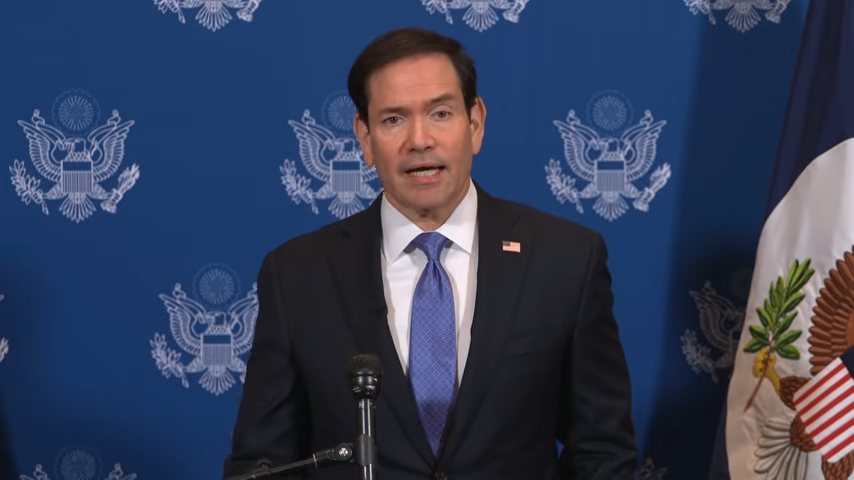
Senators from both parties are pressing the Trump administration over delayed security assistance and arms sales for Taiwan as Chinese leader Xi Jinping visits Washington.
In a Sept. 23 letter to Secretary of State Marco Rubio and War Secretary Pete Hegseth, Sens. Mitch McConnell (R-Ky.), John Cornyn (R-Texas), Lisa Murkowski (R-Alaska), and Thom Tillis (R-N.C.) questioned why three separate forms of Taiwan security support remain stalled.
A day earlier, Tillis joined Sen. Elissa Slotkin (D-Mich.), his fellow co-chair of the bipartisan Senate Taiwan Caucus, in a Sept. 22 letter urging President Donald Trump to formally notify Congress of a pending $14 billion arms package.
Senators Question $1.3 Billion in Funds
The Sept. 23 letter cited $300 million in foreign military financing appropriated for Taiwan, $1 billion for the Taiwan Security Cooperation Initiative, and the pending $14 billion arms package.
The senators asked Rubio why the $300 million had not been obligated and asked Hegseth whether the Pentagon intends to obligate the $1 billion, when it would do so, and what capabilities the money would support.
“We are concerned by President Trump’s description of Taiwan as ‘a very good negotiating chip’ in engagements with Xi Jinping and the Chinese Communist Party,” they wrote.
Bipartisan Caucus Leaders Seek Arms Sale
Slotkin and Tillis focused on the arms package in their Sept. 22 letter to Trump.
“As co-chairs of the bipartisan Senate Taiwan Caucus, we urge you to immediately move forward with the $14 billion arms sale package to Taiwan by formally notifying the sale to Congress,” they wrote.
They said Taiwan would pay for the package itself and had approved a $25 billion defense supplemental to support the purchase.
“Taiwan is also not asking for a handout,” they wrote. “They want to spend $14 billion to purchase U.S. arms to defend themselves.”
The senators also said the purchases would support U.S. jobs and the defense industrial base and argued that Taiwan arms sales should not be negotiated with Beijing.
Package Remains Under Review
The $14 billion package has been pending since Trump’s May meeting with Xi in Beijing.
Trump said after the May summit that he was holding the package “in abeyance.” On May 17, Taiwanese President Lai Ching‑te said peace and stability in the Taiwan Strait would not be “sacrificed or traded.”
At a Senate Appropriations Defense Subcommittee hearing on May 21, acting U.S. Navy Secretary Hung Cao said the sale had been paused while the United States assessed its munitions requirements during the Iran conflict.
During congressional testimony on June 2 and June 3, Rubio said the package remained under review and that considerations included weapons availability and U.S. procurement needs.
Speaking to reporters in New York on Sept. 23, Rubio said the administration was applying the same review to Taiwan that it uses for foreign military sales generally.
“If we sell you something, we don’t have it anymore,” he said.
Rubio said officials weigh proposed sales against U.S. military needs, how quickly weapons can be replaced, and whether the United States may need the equipment itself.
“That’s the process we’re undertaking, not just with Taiwan but with every commitment that we’ve made,” he said.
He added that the calculation depends on the particular weapons involved, existing stocks, and how quickly they can be replenished.
Taiwan is expected to be a key issue during the Trump–Xi meetings in Washington, with Beijing pressing the United States to curb military and diplomatic support for the island.
Taiwan is self-governed. Beijing claims sovereignty over the island, which the Chinese Communist Party has never ruled, and has not ruled out using force to bring Taiwan under its control. Taiwan rejects Beijing’s sovereignty claims.




House Committee Chairs Ask Treasury, IRS to Probe Tax-Exempt Network Tied to Shanghai-Based US Millionaire
Two House committee chairmen asked the Treasury Department and the IRS on...
Bail Breaches Surge as Victoria’s Overall Crime Rate Falls
Signage on a police vehicle in Melbourne, Australia on Sept. 16, 2022....
Australian PM Urges UN Leaders to Tackle AI, Climate Change Together
Prime Minister Anthony Albanese has issued a call to world leaders to...
Karl Stefanovic to Join Taylor, Hanson at Major Conservative Conference
Karl Stefanovic poses during the 2022 TV WEEK Logie Awards nomination announcement...