Prosecutors in Huawei Criminal Trial Allege Company ‘Cultivated Culture of Crime and Corruption’
 Nicholas ZifcakUpdated 2 hours Ago2 Mins read
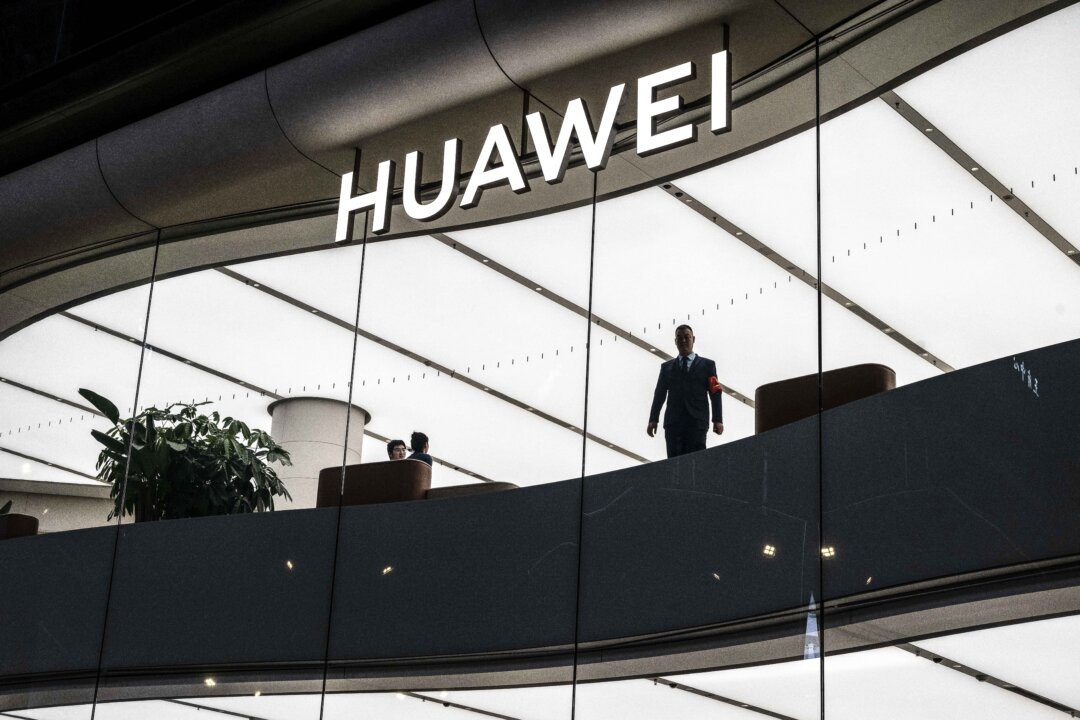
NEW YORK CITY—Prosecutors in the criminal trial against Chinese telecoms firm Huawei alleged that the company used lies, theft, cover-up, and a criminal conspiracy in its efforts to dominate the global telecommunications market.
In opening remarks at a federal court in the Brooklyn borough of New York City on Sept. 9, Assistant U.S. Attorney Taylor Stout said that Huawei “engaged in a pattern of criminal activity to expand its business empire.” He alleged that its two subsidiaries in the United States, Huawei Device USA and Futurewei Technologies, served as outposts to steal technology.
The trial covers 20 years of Huawei business activity in the United States and around the globe.
The prosecution said it will present evidence against Huawei in three categories: alleged theft of trade secrets from competitors, alleged bank and wire fraud in relation to efforts to skirt sanctions against Iran, and Huawei’s alleged cover-up and efforts to block law enforcement from investigating its business activities.
A subsidiary of Huawei, Skycom, provided Iran’s government with tools to spy on its own citizens, specifically during 2009 protests in Tehran, according to the U.S. government. Huawei employees falsely claimed that Skycom was not owned by Huawei.
Prosecutors allege that Huawei used confidentiality agreements, competitors’ employees, and third parties to acquire trade secrets on technology for routers, storage, and wireless technology.
Huawei “cultivated a culture of crime and corruption,” said Stout, such that employees who stole from competitors were just “following company practice.” Stout alleged that an engineer who stole from New York state-based Quintel, which develops cellular antennae technology, received a bonus for the information obtained.
Huawei defense attorney Brian Heberlig portrayed Huawei as a global player serving underserved and remote communities. He said the government is relying on five incidents that happened over the course of 20 years.
Heberlig argued that the prosecution’s witnesses are unreliable, as many were involved in civil litigation over commercial disputes with Huawei, including Cisco, T-Mobile, and Quintel. He also claimed that the government cherry-picked incidents to support racketeering charges but won’t be able to prove a broad overarching conspiracy.
He challenged the government narrative that Huawei fostered a culture of stealing trade secrets, saying that when such activity was discovered, “Huawei acted appropriately in all three incidents,” including by firing the employee caught taking pictures of a Fujitsu device at a conference.
Heberlig said that to prove a racketeering conspiracy, the government must prove that the “same people agreed to carry out the same criminal plan.” He said the incidents cited by the government are isolated and insufficient to prove that there was some “blueprint for a criminal conspiracy.”
The government also alleges that Huawei violated U.S. sanctions by involving the U.S. financial system in its business dealings with Iran and North Korea.
Heberlig contested prosecutors’ narrative that Huawei knowingly violated U.S. sanctions, arguing that Huawei had no intention to violate U.S. laws but that the banks it was using in its business with Iran caused the funds to route through the U.S. financial system.
Prosecutors allege that Huawei misrepresented to banks its connection with Skycom, a subsidiary that was doing business with Iran, which prosecutors say received instructions to remove all Huawei logos from hardware sold to Iran.




US Sanctions Chinese Scam Network After DOJ Interdicts Illegal Online Marketplace
The U.S. government imposed sanctions on Sept. 9 against a Chinese-run online...
Gas Prices Expected to Drop in 2027, Energy Information Administration Says
A customer at a Los Angeles gas station on July 1, 2025....
Bessent: ‘Nothing Else Matters’ If China Pulls Ahead of US in AI
Treasury Secretary Scott Bessent said the United States cannot afford to fall...
Trump Predicts Iran War Will End After 2026 Midterm Elections
President Donald Trump in New Jersey, on July 19, 2026. David Ramos/Getty...