Shanghai Petitioner Unable to Leave Beijing Hotel for Weeks, Fears Forced Disappearance
 Olivia LiUpdated 2 hours Ago4 Mins read
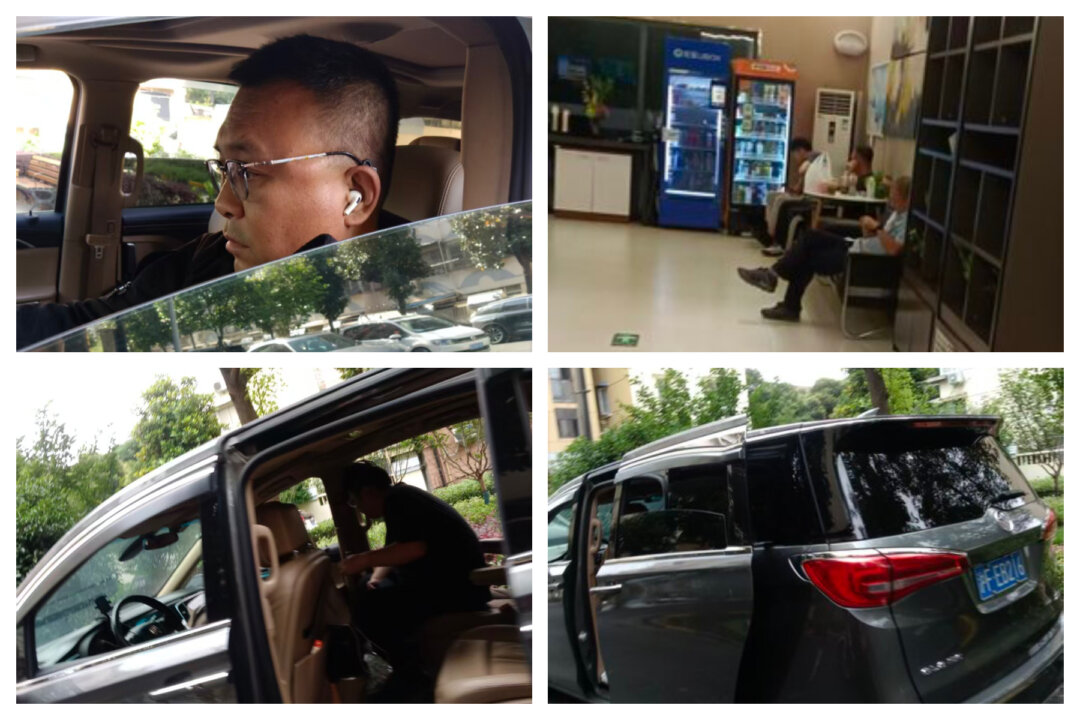
A Shanghai resident who traveled to Beijing to petition the central authorities called a friend for help on Sept. 13, saying she had been staying at a hotel for 21 days due to unidentified people whom she feared might abduct or “disappear” her if she left the hotel.
Ma Chunying, a resident of Shanghai’s Hongkou District, said she has faced decades of aggressive state surveillance, repeated arbitrary detentions, and severe physical abuse for refusing to drop her case.
Ma’s activism stems from a long-standing labor-rights dispute over the withholding of an 189-yuan ($28) workplace subsidy from her former sanitation job under the Liangcheng Subdistrict Office.
Ma arrived in Beijing on Aug. 23. The next morning, six unidentified people began monitoring the hotel where she was staying. They remained there around the clock, according to people who maintained phone contact with her. Ma suspected that the six men were government-backed interceptors deployed to track her movements.
In China, petitioners often travel to Beijing to file a request for a redress of their grievances against local government officials, a constitutional right on paper.
However, in practice, the regime routinely detains, intercepts, and persecutes those who attempt to travel to Beijing for this purpose. Petitioners’ IDs are usually flagged by local authorities when they attempt to purchase a plane, bus, or train ticket to Beijing, leaving private road travel the only remaining option in many cases.
Petitioners who managed to reach the petition office in Beijing reported long lines and lack of timely or meaningful responses after submitting their complaints.
Ma has struggled to obtain medical care, medication, and food during this period, according to Yu, an acquaintance of Ma’s who spoke to the Chinese-language edition of The Epoch Times and provided only his surname for fear of retaliation.
On Sept. 13, Ma sent Yu photographs showing what appeared to be individuals surveilling people’s movements in her hotel. Two men were seen sitting in the lobby, while a black SUV with at least two more people was parked outside.
The Epoch Times has been unable to reach Ma directly, and the identities of the people outside the hotel could not be independently confirmed.
A Shanghai petitioner who identified herself as Tingting told The Epoch Times that she has known Ma for years and believes the people watching the hotel were sent by Shanghai authorities.
Tingting recalled when she had been taken to a detention facility in 2022. She said unidentified individuals broke into her apartment in Beijing’s Fangshan District, took her identity documents, and took her to a “black jail”—an extrajudicial detention site where petitioners are held without formal legal procedure.
Tingting said she was held without judicial proceedings for 43 days.
She said she had called China’s emergency number multiple times when the individuals raided her apartment.
She said that Beijing police told her they could not help her because the individuals watching her were dispatched by Shanghai authorities.
Dispute Over Workplace Subsidy
Ma began petitioning after the dispute over her workplace subsidy, said Song Jiahong, a Shanghai volunteer who assists people in disputes with government authorities and who previously spoke to The Epoch Times.
Ma had worked in sanitation and cleaning services under Liangcheng Subdistrict in Hongkou District. Starting in 2003, Ma accused the subdistrict office of withholding the subsidy, according to Song.
The dispute later expanded into a broader conflict with local authorities, and the National Public Complaints and Proposals Administration and Shanghai petition authorities became involved, Song said.
The Hongkou District government later reached an oral agreement with Ma to provide her with a fixed monthly payment in compensation if she stopped petitioning. However, according to Song, the payments were discontinued in 2014.
After repeated efforts to resolve the dispute with local officials failed, Ma began traveling to Beijing to petition central authorities.
From 2003 to 2020, Ma was detained more than 10 separate times and spent more than 600 days in detention or other forms of confinement, Song said.
Ma also filed complaints with prosecutors alleging mistreatment, but they were not accepted, according to Song.
Repeated Abuse
Song described several instances he knew of in which Ma was detained and physically abused allegedly by local authorities.
In 2008, Ma was abducted and beaten, suffering a spinal fracture. Song said she has since relied on four metal screws to support her spine.
In December 2015, Ma went to her child’s school and was allegedly assaulted by Ke Jia, a police officer with the Liangcheng police station.
In October 2016, Ma was detained, beaten, and suffered burns to her arm after being doused with hot water, according to Song.
In September 2017, she was detained again and subjected to beatings, humiliation, and restraint over a month period.
In April 2020, Ma was traveling by train to Shanghai when she was allegedly assaulted by Shanghai police, according to Song. She suffered a fractured left leg, moderate hearing loss, and an injury to her left eye.

(Left) The complaint filed by Shanghai petitioner Ma Chunying that led to her later being sentenced to two and a half years in prison on a charge of “disrupting national order.” (Right) Ma Chunying is escorted back to Shanghai in a police transport. Courtesy of Song Jiahong
Convicted After Returning to Shanghai
In July 2020, police from the public-order division of the Hongkou District branch of the Shanghai Public Security Bureau allegedly took Ma back to Shanghai. She was subsequently detained and arrested.
On Dec. 24, 2020, she was sentenced to two and a half years in prison on a charge the source material described as “disrupting national order.”
According to Song, on the day of Ma’s trial, numerous Shanghai residents went to the court seeking to attend the proceedings as observers, but none were permitted to enter the courtroom.
Ma’s current situation in Beijing comes after years of disputes with local authorities and repeated attempts to petition higher-level government offices.
Her last known contact was on Sept. 13, when she called Yu from the hotel.
People familiar with Ma’s case said that given China’s political environment, Ma has no clear avenue to get meaningful help leaving the hotel safely or to protect herself from the risk of being forcibly taken away.
Arbitrary arrests and extrajudicial detentions are widespread in China, with petitioners frequently targeted.
Li Xi and Michael Zhuang contributed to this report.





Ahead of Trump–Xi Summit, Democrats Call for Tighter China Chip Controls
President Donald Trump and First Lady Melania Trump welcome Chinese leader Xi...
Beijing’s ‘Red Lines’ Expose CCP’s Lack of Confidence: Analyst
Hours before the summit between U.S. President Donald Trump and Chinese leader...

Trump Hosts Xi in High-Stakes Summit Amid Trade Tensions, Human Rights Concerns
WASHINGTON—President Donald Trump welcomed Chinese leader Xi Jinping on Sept. 23 for...
Congress Warned About Beijing’s Repression on US Soil
WASHINGTON—The Chinese Communist Party’s (CCP’s) sweeping repression targeting one faith group is...