
The U.S. economy registered modest growth in the second quarter on stronger-than-expected consumer spending and business investment, according to the Bureau of Economic Analysis’s second estimate released on Aug. 26.
Growth in the April–June period was 1.5 percent, unchanged from the initial estimate released last month.
This was fueled by consumer spending, exports, and business investment, which helped offset the 1 percent decline in government spending.
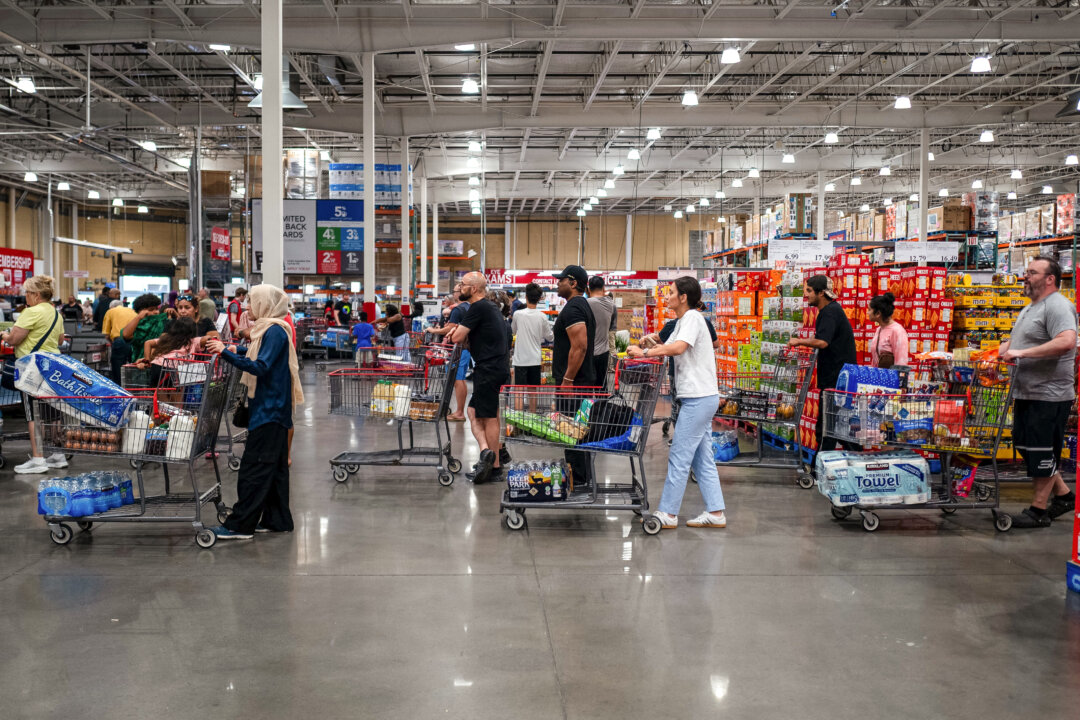
Real (inflation-adjusted) consumer spending was adjusted upward to 3.4 percent as shoppers participated in seasonal events, including the FIFA World Cup and Amazon Prime Day.
Additionally, the bureau reported that personal spending rose 0.2 percent in July, from 0.3 percent in June. This also came in higher than the consensus estimate of 0.1 percent.
Personal income jumped by a higher-than-expected 0.4 percent, from 0.2 percent in May. The gain was supported by several factors, including higher compensation levels, receipts on assets, and government transfer payments.
The personal savings rate, as a share of disposable income, rose to 3 percent.
Capital investment surged for the sixth straight quarter, increasing almost 9 percent amid spending on equipment and intellectual property products.
Imports, which are subtracted from gross domestic product (GDP) calculations, were also revised upward to 12.5 percent.
On the inflation front, prices were revised slightly higher.
Inflation in the GDP price index—a measure of price changes for goods and services produced domestically—surged to 6.4 percent.
Elevated war-driven energy costs have led to upward pressure on input prices for U.S. companies. While recent indicators suggest a deceleration as oil and gas markets stabilize, it could take some time for these factors to return to pre-conflict levels.
Eyes on 3rd Quarter GDP
While the deceleration could raise concerns about a slowing economy, early third-quarter forecasts could assuage these worries.
The widely watched Atlanta Federal Reserve’s GDPNow Model estimates that the July–September period will register a 4 percent expansion. It will be driven by consumer spending, changes in private inventories, and business investment.
The New York Fed Staff Nowcast shows a more modest 2.3 percent.
Companies’ capital expenditures have rocketed this year, fueled in part by the artificial intelligence (AI) infrastructure buildout.
The AI hyperscalers alone—Alphabet, Amazon, Meta Platforms, and Microsoft, for example—plan to spend up to $1 trillion on capex. The boom’s fingerprints are all over the data, from trade reports to factory activity. There is little evidence that the capex boom is slowing, as market watchers project that Big Tech will spend another $1 trillion next year.
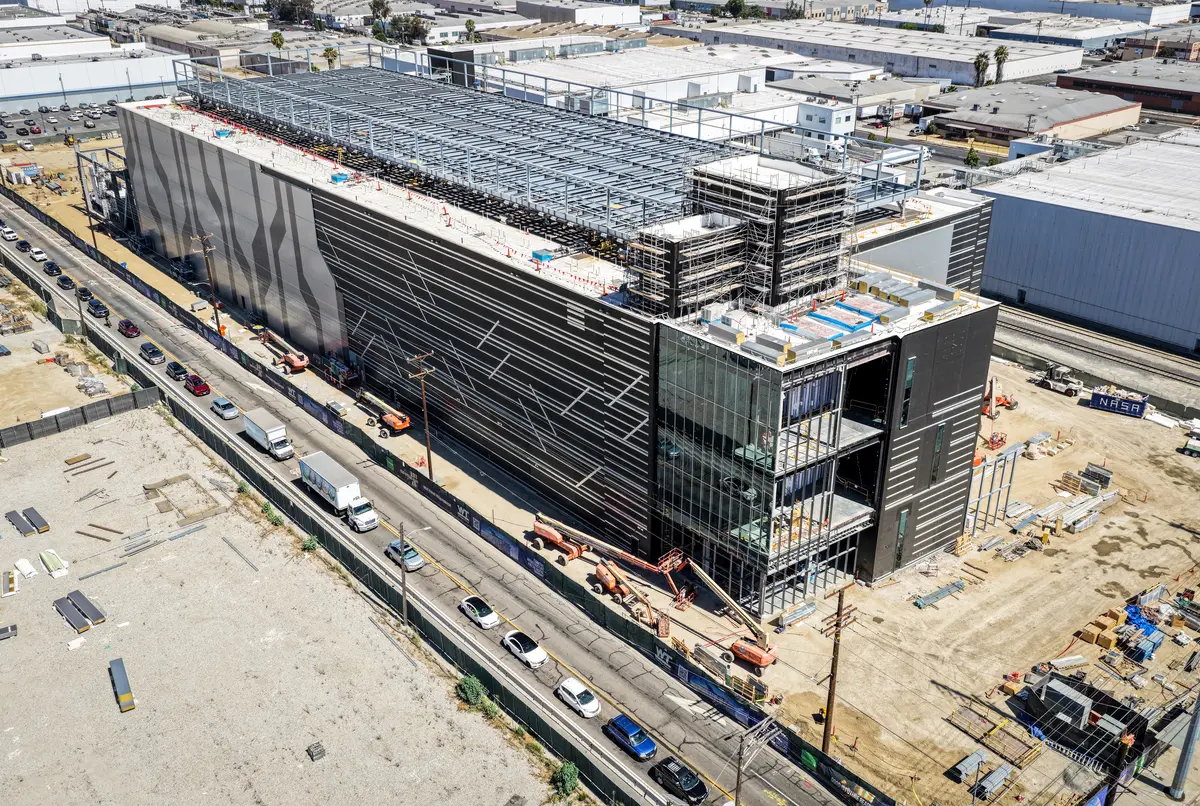
A 49.5-megawatt three-level data center under construction in Vernon, Calif., on July 8, 2026. A surge in demand for artificial intelligence infrastructure is fuelling a boom in data centers in North America and around the globe. Mario Tama/Getty Images
“We’re seeing extremely strong demand for the ultimate use case and the [return on investment] of AI. I think people are seeing that in their everyday lives as well. That’s really how we’re looking at the capex,” Evan Schlossman, principal at Neostellar, said in an emailed note to The Epoch Times.
Persistent capex spending could offset a potentially more cautious consumer.
July’s retail sales unexpectedly declined, suggesting shoppers may be more reluctant to open their wallets.
Additionally, The Conference Board’s August consumer confidence index decelerated for the second consecutive month amid growing pessimism surrounding business conditions and the labor market.
“Consumers are optimistic about today but increasingly nervous about tomorrow,” Jeffrey Roach, chief economist at LPL Financial, said in a note emailed to The Epoch Times.
“Assessments of current conditions improved materially, while future expectations fell to their lowest level since January as Middle East tensions and income concerns weighed on sentiment.”
Spending could bounce back in the August and September numbers as many Americans participate in the busy back-to-school shopping season.
A National Retail Federation report found that 62 percent of U.S. consumers began their back-to-school shopping last month. The trade group forecasts total spending will be close to $147 billion this year.
With falling crude oil prices—which extended their losses by another 2 percent midweek—motorists could see some savings at the pump later next month.
As of Aug. 26, the national average price for a gallon of gas is $4.10, according to the American Automobile Association.