LNG Canada to Use Chinese Steel in Modules for Substantial Part of $33 Billion Expansion
 Paul Rowan BrianUpdated 5 hours Ago3 Mins read
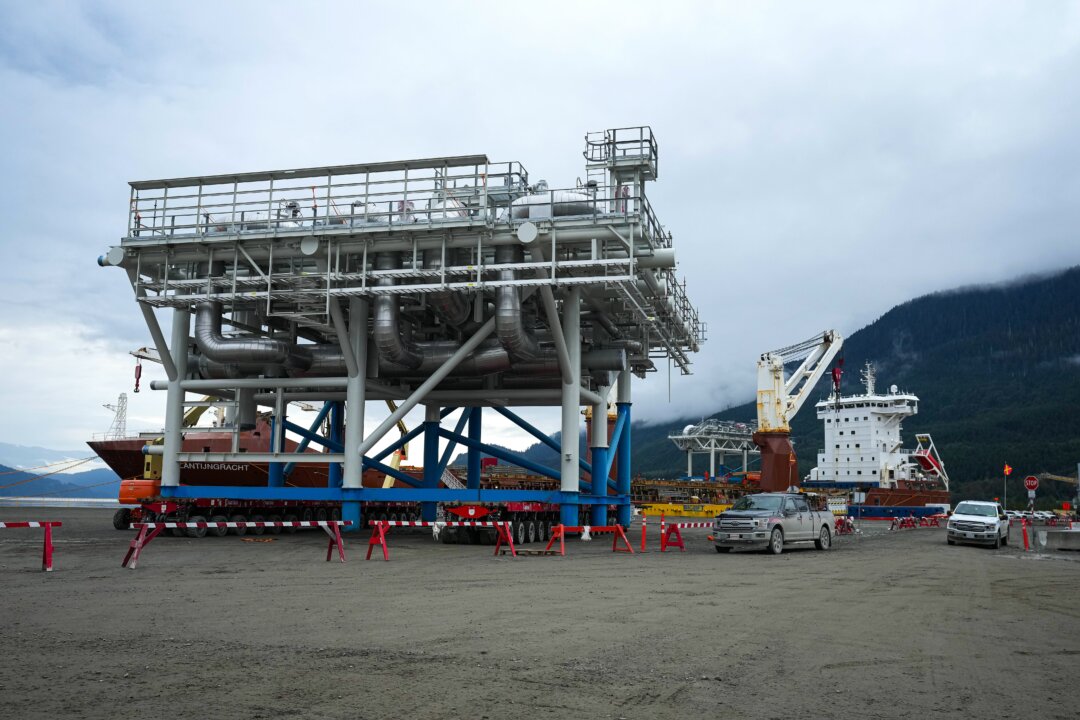
Large prefabricated sections for LNG Canada’s $33 billion liquefied natural gas (LNG) Phase Two facility expansion will be built in China and shipped to B.C., as they were for Phase One, the company has confirmed.
The expansion was one of the projects referred by the Prime Minister’s Office in September 2025 to the Major Projects Office for fast-tracked regulatory approvals. Energy Minister Tim Hodgson said at the time that projects that would be referred to the office to be prioritized are the ones to be built with “Canadian steel, lumber and aluminum and by Canadian engineers and trades people.”
LNG Canada announced the launch of its Phase Two expansion on Sept. 29, saying it is expected to be operational by the early 2030s. The expansion will double production capacity from 14 million to 28 million tonnes per year. The LNG Canada plant, which came online in the summer of 2025, is Canada’s first large-scale LNG export facility.
The company has chosen state-controlled China Offshore Oil Engineering Co. Ltd. (COOEC) to build the prefabricated sections.
LNG Canada said the decision not to use a Canadian manufacturer for the plant component is driven by technical reasons.
“For the plant construction in Kitimat, the challenge is not a preference for offshore steel, but the specialized fabrication capability required for modules of this scale and complexity,” a spokesperson for LNG Canada told The Epoch Times in a statement.
“There are no fabrication yards in Canada that can manufacture and deliver the additional modules required for Phase 2.”
LNG Canada said that there are only five fabrication yards in the world that have “the combination of space, capacity, quality systems and marine access required for this scope of work” it needs done for Phase Two and said COOEC is one of those yards. The company added that the Chinese manufacturer has also “successfully fabricated modules for LNG Canada’s Phase 1.”
The company noted that the pipeline compressor part of its expansion on the Coastal GasLink pipeline will use “almost 15,000 tonnes of steel from Canadian suppliers or mills, representing approximately 70 per cent of the steel required for that work.”
LNG Canada’s Sept. 29 announcement of a final investment decision on the Phase Two expansion was heralded by Prime Minister Mark Carney, who said it showed Canada is “building big again.”
“We’re building big, building fast, and crucially, as everyone has emphasized, building in the right way, working together, working for all Canadians, and we are just getting started,” Carney said at the Sept. 29 announcement in Vancouver.
While Conservative Leader Pierre Poilievre greeted the announcement positively, calling it “long-delayed good news,” he said that the government should have created an environment where Canadian steel could be used for this major project instead.
“We must build big with Canadian steel by ending the industrial carbon tax, and tackling steel dumping from trade abusers,” Poilievre said on social media.
Poilievre cited the recent idling of finishing operations at the Stelco steel plant in Hamilton, Ont., which the company has said could impact up to 500 workers. The company announced the changes Sept. 28, citing U.S. tariffs and pressure due to steel imports into Canada, but said production would still carry on at its Lake Erie Works plant in Nanticoke, Ont.
Conservative MP Adam Chambers recently said China’s steel dumping is undermining Canadian suppliers.
Conservative MP Dean Allison has also recently called attention to the fact that state-controlled PetroChina owns 15 percent of LNG Canada, along with 40 percent held by Shell, 25 percent by Malaysian company Petronas, Mitsubishi Corporation at 15 percent, and Korea Gas Corporation at 5 percent.
In response to a question from Conservative MP Shannon Stubbs regarding a security review done on PetroChina’s ownership stake in LNG Canada, Minister of Internal Trade Dominic LeBlanc said he was “satisfied” with what he’d seen.
“I am responsible for that. I am satisfied, after the briefings I received, that the review is done. Check the box. It’s done,” he said April 28 of this year.
The government has not released the review publicly, stating its confidentiality under the provisions of the Investment Canada Act.
The federal and provincial Conservatives previously also raised concerns about B.C. Ferries’ decision in 2025 to choose a subsidiary of a state-owned Chinese shipyard to build four new vessels for its fleet.





Anti-Israel Oct. 7 event to ‘honour martyrs’ will not proceed on U of T campus: university
University College at University of Toronto in Toronto, Ontario on Wednesday, September...

Chris Selley: If judges now can’t even tell what a ‘fact’ is, we’re really cooked
Facts? Supporters of the Drug User Liberation Front outside a Vancouver courthouse...
Conrad Black: Carney’s invasion musings
Prime Minister Mark Carney speaks during a Liberal caucus meeting on Parliament...
Co-Pilot Used Crash Axe in Attempted Terrorist Attack on Israel-Bound Flight, UAE Says
The United Arab Emirates prosecutor general said Saturday that the co-pilot of...