Progress Being Made Against Ebola in Congo, but Outbreak Far From Over, Says WHO
 Victoria FriedmanUpdated 3 hours Ago2 Mins read
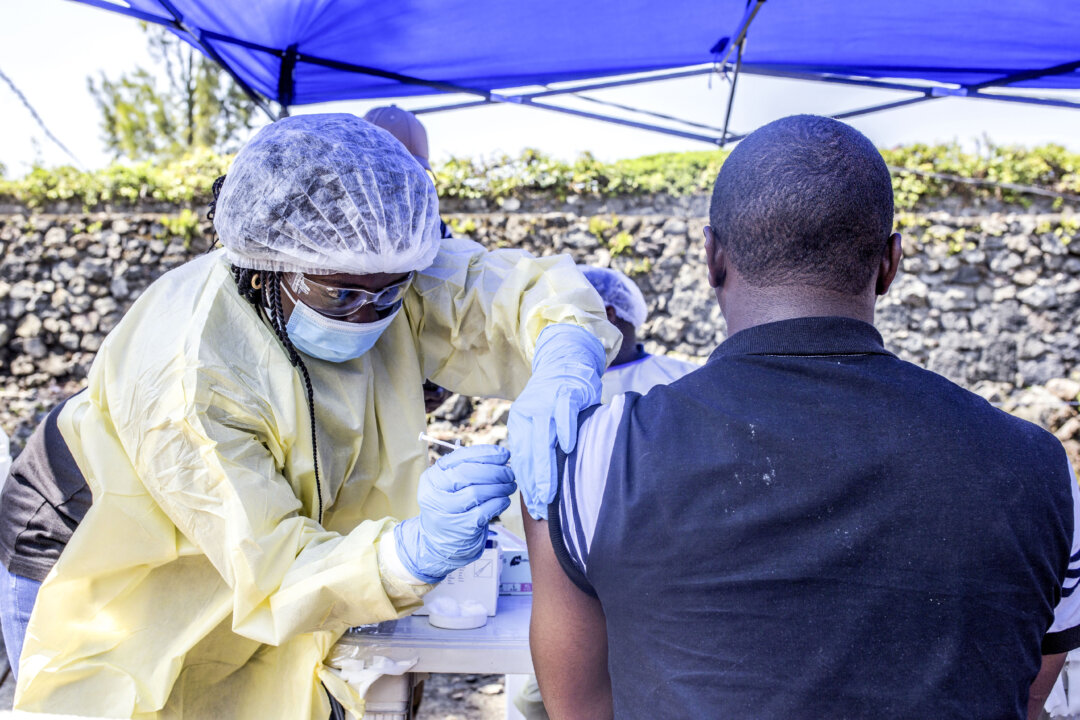
There are signs that efforts to contain Ebola in Congo are gaining ground, but the epidemic is far from over, the World Health Organization (WHO) said.
WHO Director-General Tedros Adhanom Ghebreyesus said during a press conference on Sept. 16 that transmission is going down in the most affected areas of Ituri province, the epicenter of the outbreak. Also, no new cases have been seen in South Kivu since May, with the epidemic mostly contained to north-eastern Congo.
“I have said before that the Ebola epidemic in the Democratic Republic of the Congo had a big head start, and we’re playing catch up in the response,” Tedros said. “We are now starting to see encouraging signs that we are gaining ground.”
The current outbreak is
caused
by the rare Bundibugyo ebolavirus. The outbreak was
detected
in mid-May in Congo, which has dealt with more than a dozen Ebola outbreaks in the past.
However, the WHO director-general said the epidemic continues to grow. While there are signs of reduced transmission in Ituri, it is falling from a high level, he said, and in North Kivu, the number of cases is rising fast.
Tedros said it is hard to speak of a “single epidemic”—rather, it is “many outbreaks in many places.”
“Make no mistake: the epidemic continues to grow, and continues to kill,” he said.
Congo’s National Institute of Public Health said in a Sept. 17 statement that there are 7,404 confirmed cases and there have been 3,577 deaths as a result of Ebola, representing a case fatality rate of 48.3 percent.
The outbreak has become the deadliest in Congo’s history after surpassing the 2018–2020 epidemic, in which 2,299 people died.
Across the whole of Africa, this epidemic is now second only to the 2014–2016 West African outbreak, which infected at least 28,600 people and killed more than 11,000 across Guinea, Liberia, and Sierra Leone.
There is no approved treatment or vaccine for this strain of the virus, but the WHO
said
last month that clinical trials are underway to develop a vaccine.
‘Cautiously Optimistic’
Maria Van Kerkhove, director of the Department of Epidemic and Pandemic Management at the WHO, echoed Tedros’s assessment that while there are positive signs in terms of the medical response to the outbreak, they are “cautiously optimistic about what is happening.”
“I think we need to be realistic about the road that’s ahead of us,” Van Kerkhove said at the same press conference.
The WHO director said response has improved dramatically and, as a result of better surveillance and recording, authorities may see an increase in the number of cases.
“We have many, many months ahead of us, and I think what we want to emphasize in our messaging is that that intensity and that response needs to be maintained,” Van Kerkhove said. “We need the support of all of us as partners in support of DRC, but also support in the responses itself. This is far from over.”
The WHO’s remarks follow similar observations from the United Nations, which on Sept. 15 said that efforts to contain the virus were showing results, including in the hardest-hit areas.
Congolese authorities in August
launched
a targeted Ebola vaccination program for healthcare staff and frontline workers.
These workers received the Ervebo vaccine, which was effective in past Ebola outbreaks caused by a different, more common type of the virus.



Carney speaks to the European Parliament; what Canada might have to give up in EU alliance; and more
Prime Minister Mark Carney attends the annual keynote address by European Commission...
Chris Selley: A European alliance deserves more seriousness than Carney’s treated it with
Canadian Prime Minister Mark Carney delivers a speech in the hemicycle of...
Jamie Sarkonak: Don’t trust Carney to tell us what EU ‘associate membership’ means
Mark Carney delivers a speech in the hemicycle at the European Parliament...
U of T called out for ‘despicable’ research group dedicated to anti-Zionism theories
A demonstrator waves a Palestinian flag inside an anti-Israel encampment at the...