Treasury to Buy Back $6 Billion in Long-Dated US Government Debt
 Andrew MoranUpdated 5 hours Ago2 Mins read
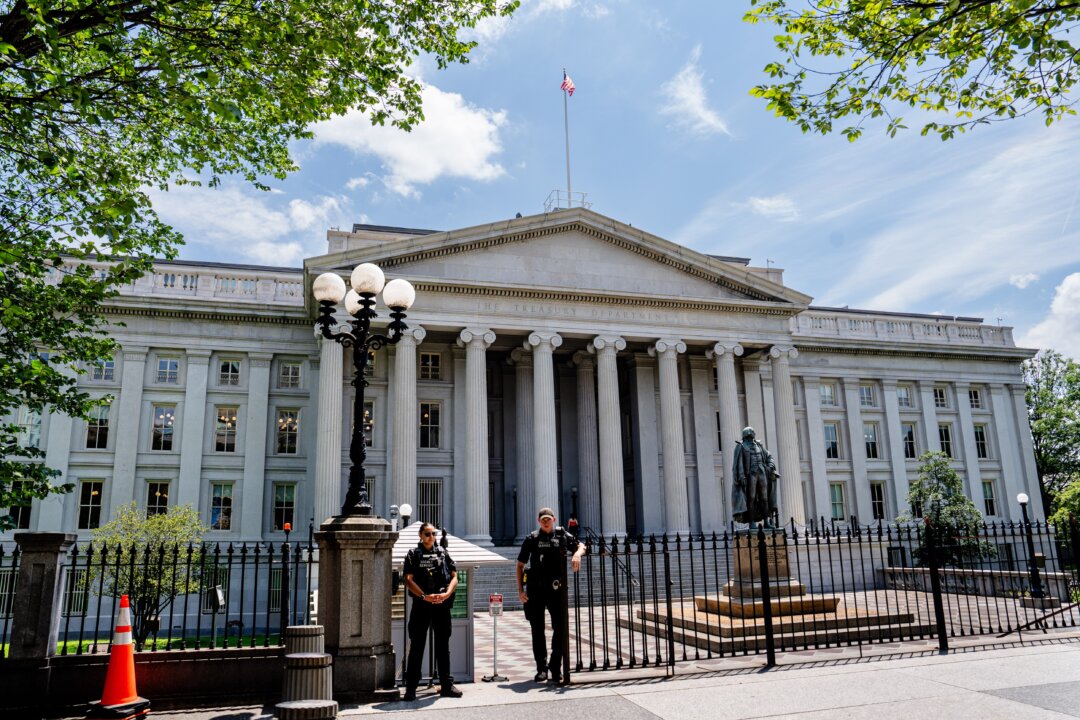
The Treasury Department said on Sept. 9 that it will buy back $6 billion in long-term debt, more than it initially announced last month.
On Aug. 19, the Treasury confirmed that it would increase debt buybacks from $2 billion to at least $4 billion to put pressure on long-dated yields.
But a preliminary announcement revealed that the Treasury plans to repurchase $6 billion in 10- and 20-year government bonds.
This is triple the normal amount and 50 percent more than last month’s department plan.
The operation will take place on Sept. 9.
A buyback campaign involves repurchasing U.S. government bonds to lower long-term interest rates.
Under Bessent, the agency is not only buying long-term Treasury securities but also replacing them with short-term bonds (maturities of 1 month to 2 years).
Yields on Treasury securities surged following the buyback announcement.
The benchmark 10-year yield advanced 5 basis points to 4.85 percent, the highest since October 2023.
The 30-year Treasury bond yield returned to 5.31 percent—the highest since June 2007—after being stuck in a tight 5.2 percent to 5.25 percent range since Bessent’s announcement in August.
The Treasury, meanwhile, appears to have gotten a head start on buybacks.
On Sept. 3, the Treasury unveiled $12.5 billion in debt buybacks. The department also executed $4 billion in buybacks on Aug. 25.
U.S. stocks added to their losses, as the leading stock market benchmark averages fell as much as 0.8 percent.
Rising yields could eventually become a “painful experience” for U.S. and global stocks, says Natalia Lojevsky, managing director at CIFC Asset Management.
“The equity market has been remarkable in the way that it’s been able to look through or look past these rising yields, because they’ve sort of been on the higher side for some time now,” Lojevsky told The Epoch Times in an emailed note.
“But eventually, it starts to catch up, and I think that’s what’s happening.”
‘I Am the House Now’
Bessent, during an event at Southern Methodist University in Texas, said he is privy to “asymmetric information,” effectively making him “the house.”
“I am the house now, so when we intervene with the Japanese yen, I have pretty good insight into what the Japanese, what the Bank of Japan, is going to do, what Japanese policymakers are going to do,” Bessent said.
“And you can bet against me if you want.”
His remarks pertained to the Treasury intervening in foreign-exchange markets to prop up the Japanese yen and prevent Tokyo from selling its U.S. debt holdings.
This was the first joint U.S.–Japan operation since the Asian Financial Crisis in 1998, and the action could be paying off for Japan’s currency.
The yen has strengthened against the greenback by almost 4 percent over the past month, trading close to 153 per U.S. dollar.

Japanese yen and U.S. dollar banknotes on June 15, 2022. Florence Lo/Illustration/Reuters
“The joint effort sent a strong signal that both countries are willing to aggressively defend the currency against further weakness and volatility,” Adam Turnquist, chief technical strategist at LPL Financial, said in a note emailed to The Epoch Times.
Tighter monetary policy could also be working in the yen’s favor.
Markets are increasingly pricing in a quarter-point interest rate hike when the Bank of Japan concludes its two-day policy meeting on Sept. 18.
If so, the central bank’s move would lift its key policy rate to its highest level in more than 30 years, to 1.25 percent.
Investors are also betting on another rate hike at the December meeting.
“Better-than-expected GDP, rising inflation, and wage growth near 30-year highs have underpinned the hawkish repricing,” Turnquist added.






Gas Prices Expected to Drop in 2027, Energy Information Administration Says
A customer at a Los Angeles gas station on July 1, 2025....

How Major US Stock Indexes Fared Sept. 9
Stocks fell on Wall Street as the price of crude oil topped...
Adjustable Mortgage Demand Rises as Fixed Rates Hit 15-Month High: Report
Homes in Fontana, Calif., on Sept. 17, 2025. Mario Tama/Getty ImagesHigher mortgage...

Data Centers and AI Should Keep Driving Earnings Higher
CommentaryWith the latest earnings season now wrapped up, The Wall Street Journal...